
Dhaka

Ahsan Manzil

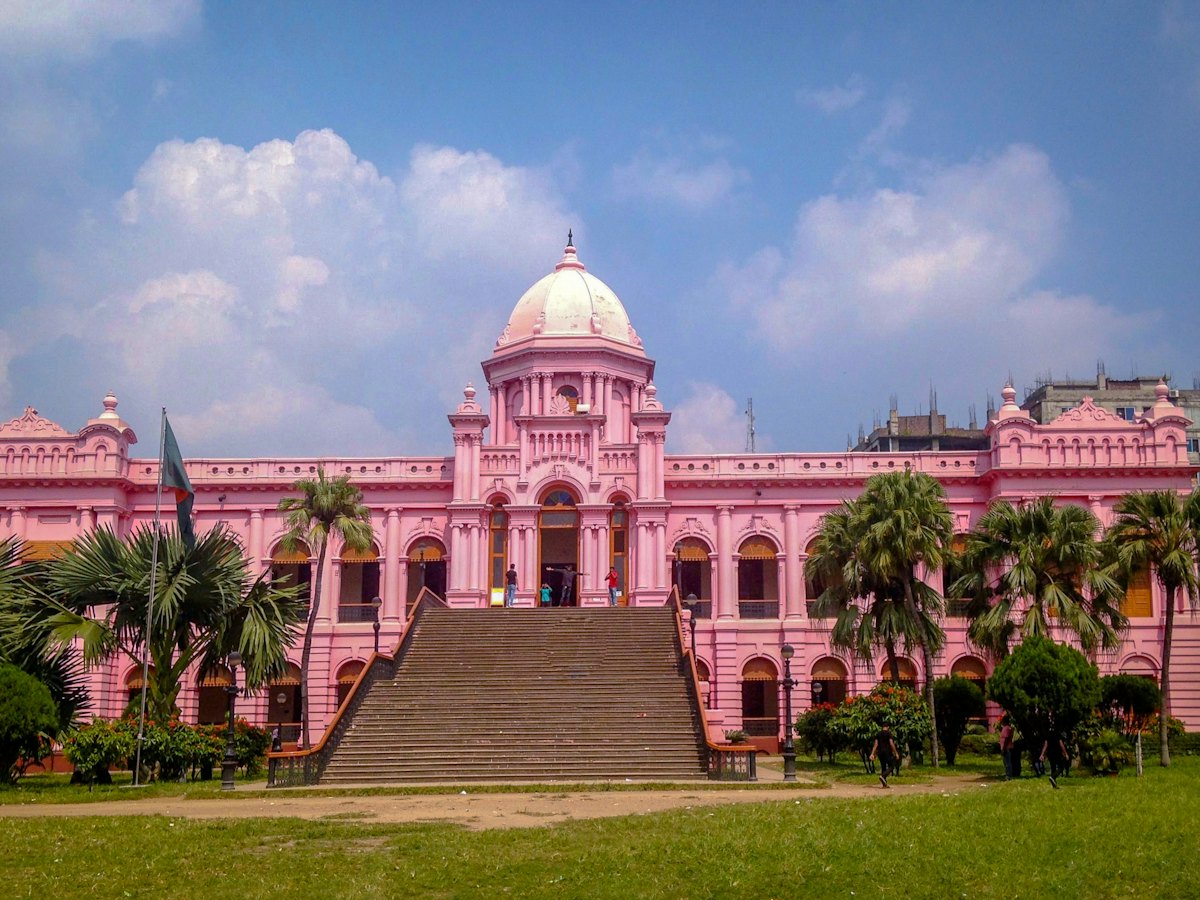
The pink palace of the Nawabs of Dhaka, now a museum.

Local food to try

  • Kacchi biryani

    Ahsan Manzil

    Old Dhaka’s signature dish of mutton and rice, slow-cooked in a sealed pot and served with borhani.

  • Bakarkhani

    Ahsan Manzil

    Crisp, layered flatbread baked in clay ovens, sold fresh from Old Dhaka’s small bakeries.

  • Lassi

    Ahsan Manzil

    Thick, sweet yoghurt drink from the neighbourhood sweet shops.

Where to eat

  • Nazira Bazar and Bangshal

    Old Dhaka

    A short rickshaw ride north: biryani houses such as Haji Biryani (since 1939), kebab stalls and sweet shops.

    Open in Google Maps (opens in a new tab)
  • Local eateries around the palace

    Islampur and Sadarghat

    Simple rice-and-curry hotels and tea stalls serving traders and travellers.

    Open in Google Maps (opens in a new tab)

Where to stay

  • Motijheel and Paltan

    Central Dhaka

    Budget hotels closest to Old Dhaka and the river front.

    Open in Google Maps (opens in a new tab)
  • Dhanmondi

    Central Dhaka

    Mid-range hotels and restaurants in a calmer part of the city.

    Open in Google Maps (opens in a new tab)

Culture

The palace stands in the old riverside quarter of Dhaka, among wholesale markets, warehouses and ghats. Walk the lanes of Islampur nearby, long known for its cloth trade, to see Old Dhaka’s business life much as it has run for generations.

History

Ahsan Manzil was the palace of the Nawabs of Dhaka, the family of landowners who were the city’s leading Muslim household in the 19th and early 20th centuries. Nawab Khwaja Abdul Ghani built the palace on the bank of the Buriganga and named it after his son, Khwaja Ahsanullah; it was completed in 1872.

A tornado badly damaged the building in 1888, and in the rebuilding it gained the tall dome that is now its best-known feature. For decades the palace was the centre of Dhaka’s political and social life, where viceroys, governors and leaders were received.

After the Nawab family’s fortunes declined, the palace fell into disrepair. The government restored it, and since 1992 it has been a museum under the Bangladesh National Museum. Its rooms show the furniture, portraits and household objects of the Nawabs, and the grand staircase and wide verandas still look out over the river.

Tour plans

Palace and river morning

Half a day
  1. Step 1: Ahsan Manzil museum

    Walk through the Nawabs’ rooms, the grand hall and the staircase, then out to the riverside veranda.

  2. Step 2: A boat on the Buriganga

    From the nearby ghats, hire a small rowing boat for a short trip to see the palace and the launches from the water.

  3. Step 3: Sadarghat

    Watch the launches load and the river traffic at the terminal next door.

  4. Step 4: Lunch at Nazira Bazar

    Take a rickshaw north for kacchi biryani and borhani.

Map

Open in Google Maps (opens in a new tab)View larger map (opens in a new tab)

Plan your visit

Best time to visit

October to March; arrive in the morning, before the afternoon crowds.

How to get there

On the Buriganga near Sadarghat: a rickshaw from Gulistan or Bangshal.

Travel tips

  • Check opening days before you go; the museum closes on one day a week and on some public holidays.
  • Buy tickets at the counter by the gate; there is a separate rate for foreign visitors.
  • Photography may not be allowed inside the galleries — follow the signs and the guards.
  • The best photo of the pink façade is from the lawn in front, or from a boat on the Buriganga.
  • Combine it with Sadarghat, a few minutes’ walk away, but keep valuables close in the crowds.

Discover