
Dhaka

Curzon Hall

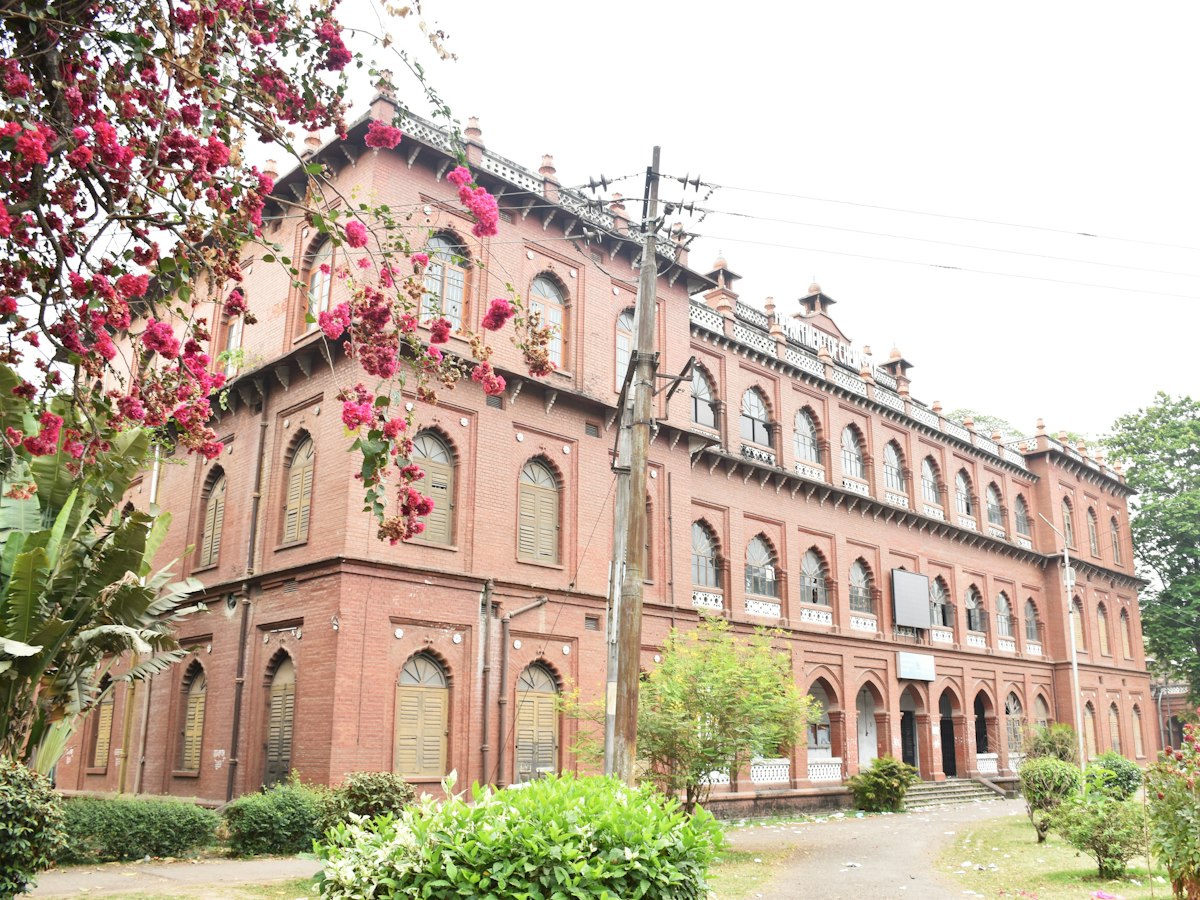
A red-brick building from 1905 that blends European and Mughal styles.

Local food to try

  • Fuchka and chotpoti

    Curzon Hall

    The city’s favourite street snacks, sold around TSC and the campus.

  • Milk tea

    Curzon Hall

    Strong, sweet tea from the stalls where students gather in the evening.

  • Kacchi biryani

    Curzon Hall

    Old Dhaka’s signature dish, a short ride south of the campus.

Where to eat

  • TSC

    University of Dhaka

    Tea stalls and street food — fuchka, chotpoti, jhalmuri — where students gather.

    Open in Google Maps (opens in a new tab)
  • Nazira Bazar and Bangshal

    Old Dhaka

    Old Dhaka’s biryani houses, including Haji Biryani (since 1939), a short ride south.

    Open in Google Maps (opens in a new tab)

Where to stay

  • Motijheel and Paltan

    Central Dhaka

    Budget hotels on the metro line, close to the campus and Old Dhaka.

    Open in Google Maps (opens in a new tab)
  • Dhanmondi

    Central Dhaka

    Mid-range hotels and restaurants a short ride west.

    Open in Google Maps (opens in a new tab)

Culture

Curzon Hall sits in the heart of Dhaka’s student life. On 21 February, International Mother Language Day, people walk past it in their thousands to lay flowers at the Central Shaheed Minar nearby, and the campus fills with songs and alpona painted on the roads.

History

Curzon Hall is the red-brick landmark of the University of Dhaka. It is named after Lord Curzon, the Viceroy of India, who laid its foundation stone in 1904, around the time Bengal was partitioned and Dhaka became the capital of the new province of Eastern Bengal and Assam. It was planned as a town hall.

The design mixes European and Mughal styles: horseshoe and cusped arches, small domes and kiosks on the roofline, and deep verandas, all in red brick with lighter trim. When the University of Dhaka was founded in 1921, the building became part of it, and it has housed the Faculty of Science ever since.

Curzon Hall also has a place in the country’s history. In 1948, students here protested when Muhammad Ali Jinnah declared at a university convocation that Urdu alone would be the state language of Pakistan — one of the first sparks of the Language Movement.

Tour plans

A walk through the university

Half a day
  1. Step 1: Curzon Hall

    Walk around the building and its lawns to see the arches and domes from every side.

  2. Step 2: Central Shaheed Minar

    A few minutes away, the memorial to those killed in the Language Movement of 1952.

  3. Step 3: Doel Chattar

    The roundabout with its sculpture of the magpie robin, the national bird, beside the old buildings of the campus.

  4. Step 4: Tea at TSC

    End the afternoon with tea and fuchka among the students.

Map

Open in Google Maps (opens in a new tab)View larger map (opens in a new tab)

Plan your visit

Best time to visit

October to March, in the late afternoon, when the light warms the red brick.

How to get there

On the University of Dhaka campus. The nearest metro station is Dhaka University.

Travel tips

  • Curzon Hall is a working university building: enjoy it from the grounds and do not disturb classes or exams.
  • Visitors are usually welcome on the lawns, but entry may be restricted at times — follow the guards’ instructions.
  • Avoid political gatherings or demonstrations on campus.
  • The Dhaka University metro station is a short walk away.
  • Combine it with the Central Shaheed Minar and the Doel Chattar nearby.

Discover