
Dhaka

Lalbagh Fort

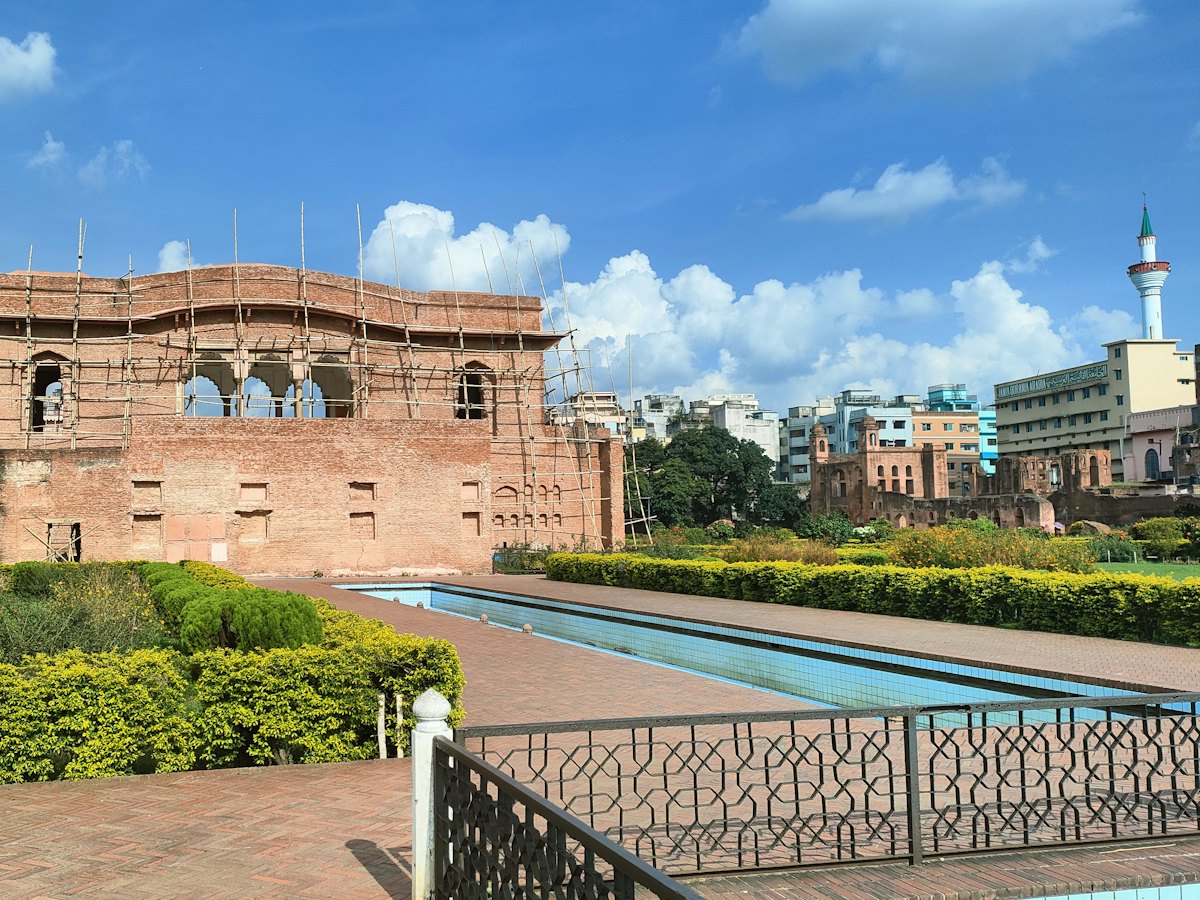
An unfinished 17th-century Mughal fort with gardens and the tomb of Pari Bibi.

Local food to try

  • Kacchi biryani

    Lalbagh Fort

    Mutton and rice slow-cooked together in a sealed pot — the dish Old Dhaka is known for.

  • Bakarkhani

    Lalbagh Fort

    Crisp, layered flatbread from the clay ovens of Old Dhaka, best with a cup of tea.

  • Lassi

    Lalbagh Fort

    Thick, sweet yoghurt drink from Old Dhaka’s sweet shops — welcome after a hot walk.

Where to eat

  • Lalbagh and Chawkbazar

    Old Dhaka

    Small biryani and kebab shops, bakarkhani bakeries and tea stalls in the lanes around the fort.

    Open in Google Maps (opens in a new tab)
  • Nazira Bazar

    Old Dhaka

    A short rickshaw ride away: home of Haji Biryani (since 1939) and other long-running biryani houses.

    Open in Google Maps (opens in a new tab)

Where to stay

  • Motijheel and Paltan

    Central Dhaka

    Budget hotels closest to Old Dhaka, near Kamalapur station and many bus counters.

    Open in Google Maps (opens in a new tab)
  • Dhanmondi

    Central Dhaka

    Mid-range hotels and good restaurants, a short drive from Lalbagh via Azimpur.

    Open in Google Maps (opens in a new tab)

History

Lalbagh Fort is the best-known Mughal monument in Dhaka. It was begun in 1678 by Prince Muhammad Azam, a son of the emperor Aurangzeb, while he was governor of Bengal, and was first called Fort Aurangabad. Azam was recalled to Delhi after little more than a year, and the work passed to the governor Shaista Khan.

Shaista Khan’s daughter, Pari Bibi, died while the fort was being built. Seeing her death as a bad omen, he stopped the work, and the fort was never finished. Her tomb, faced with marble and stone, stands at the centre of the complex.

Inside the walls are three main buildings: the tomb of Pari Bibi, a three-domed mosque and the Diwan-i-Aam, the governor’s hall of audience with its bathhouse (hammam), now a small museum. Gardens, fountains and gateways fill the space between them, and parts of the massive outer walls and gates still stand.

Tour plans

Lalbagh and the Mughal lanes

Half a day
  1. Step 1: Lalbagh Fort at opening time

    Walk the gardens while they are quiet and see the tomb of Pari Bibi and the mosque from the paths.

  2. Step 2: The Diwan-i-Aam museum

    Look at the Mughal-era weapons, coins and manuscripts, and the old bathhouse below the hall.

  3. Step 3: Dhakeshwari Temple

    A short rickshaw ride north-east to the National Temple.

  4. Step 4: Lunch in Old Dhaka

    Head to Nazira Bazar for kacchi biryani and borhani, then bakarkhani and tea.

Map

Open in Google Maps (opens in a new tab)View larger map (opens in a new tab)

Plan your visit

Best time to visit

October to March, early in the morning or late afternoon when the gardens are cooler.

How to get there

In Old Dhaka. The lanes are narrow and busy: a rickshaw from Azimpur or Nilkhet is the easiest way in.

Travel tips

  • Arrive soon after opening: the gardens are quiet in the morning and crowded on holidays and weekend afternoons.
  • Check opening days before you go; like other heritage sites, it closes on some days of the week.
  • Buy your ticket at the counter by the gate; there is a separate rate for foreign visitors.
  • Dress modestly if you visit the mosque, and take your shoes off before entering.
  • Bring water and a hat in summer — there is little shade on the paths.
  • Old Dhaka traffic is slow, so leave extra time to get here and away.

Discover