Bogura, Rajshahi

Mahasthangarh

The ruins of Pundranagara, one of the oldest cities in Bangladesh.

Local food to try

  • Bogura doi

    Mahasthangarh

    The famous sweet yoghurt of Bogura, set in clay pots.

  • Kotkoti

    Mahasthangarh

    A crunchy fried sweet sold at stalls around Mahasthangarh — a classic thing to take home.

Where to eat

  • Mahasthan bazar

    Mahasthangarh

    Tea stalls, simple eateries and kotkoti sellers near the shrine.

    Open in Google Maps (opens in a new tab)
  • Bogura town

    Bogura

    Restaurants and sweet shops for a full meal and Bogura doi.

    Open in Google Maps (opens in a new tab)

Where to stay

  • Hotels in Bogura town

    Bogura

    The natural base: plenty of hotels, a short ride from the site.

    Open in Google Maps (opens in a new tab)

Culture

The shrine of Shah Sultan Balkhi draws pilgrims through the year. The Behula–Lakhindar story of the Manasa legend is attached to Gokul Medh and is still told across north Bengal.

History

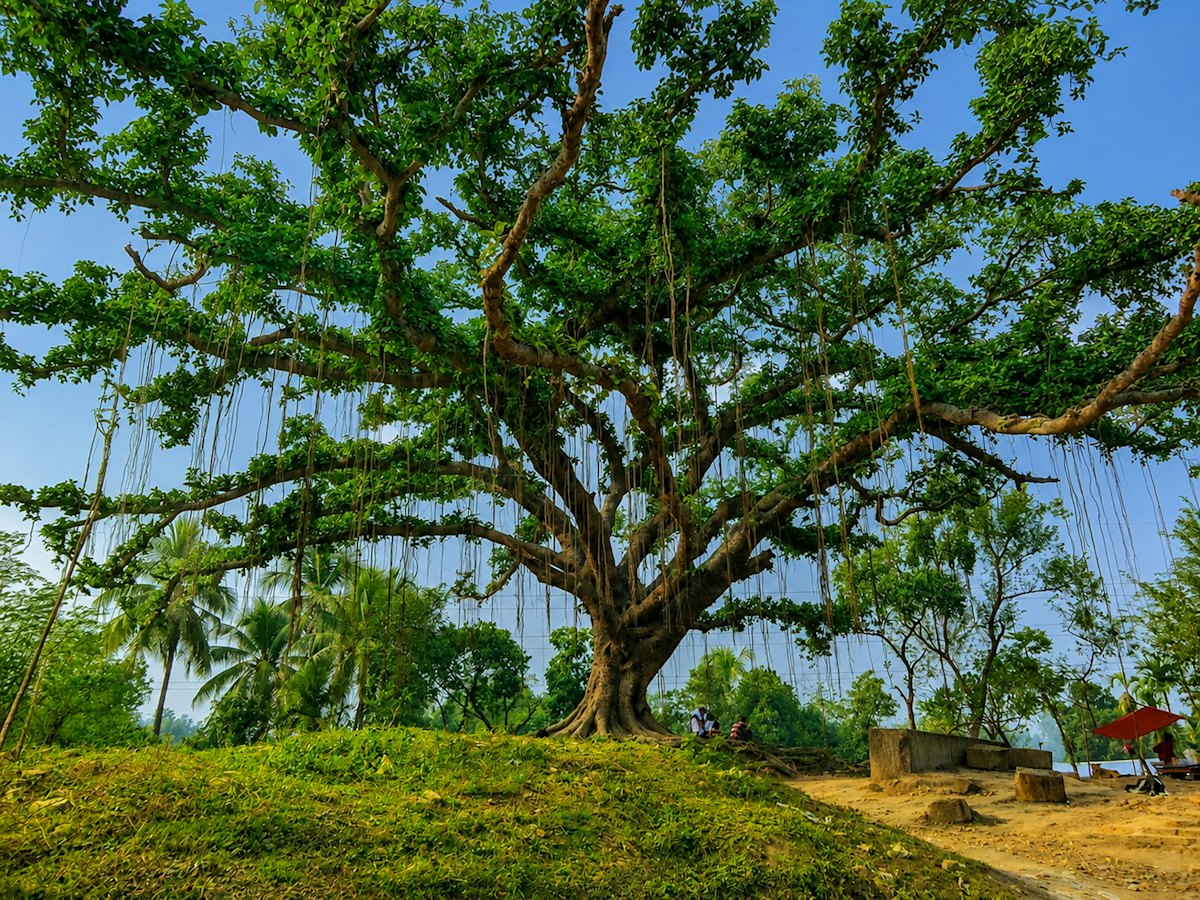
Mahasthangarh is the site of ancient Pundranagara, capital of the Pundra region and among the oldest urban sites in Bangladesh. A fortified city on the bank of the Karatoya river, it was occupied for well over a thousand years, under the Mauryas, the Guptas, the Palas and later rulers.

The most famous find is the Mahasthan Brahmi inscription, a short text on stone generally dated to around the 3rd century BCE, one of the oldest written records found in Bangladesh. Today the brick ramparts of the citadel still rise above the surrounding fields, and excavated mounds with temple, monastery and palace remains are scattered for miles around.

On the citadel stands the shrine of Shah Sultan Balkhi Mahisawar, a saint remembered in local tradition for bringing Islam to the area. Nearby are the Gokul Medh mound — popularly called Behular Basor Ghor after the heroine of the Manasa legend — and a site museum displaying coins, terracotta and sculpture from the excavations.

Tour plans

Ancient Pundranagara

1 day
  1. Step 1: The citadel walls

    Arrive in the morning and walk along the brick ramparts above the Karatoya.

  2. Step 2: Shah Sultan Balkhi’s shrine

    Visit the shrine on the citadel, dressed modestly.

  3. Step 3: Site museum

    See coins, terracotta and sculpture from the excavations.

  4. Step 4: Gokul Medh by van

    Take a van out to the Behular Basor Ghor mound, a few kilometres away.

  5. Step 5: Bogura doi

    Buy kotkoti at the bazar, then end the day in Bogura town with a pot of doi.

Map

Open in Google Maps (opens in a new tab)View larger map (opens in a new tab)

Plan your visit

Best time to visit

November to February; start in the morning to see the citadel, museum and outlying mounds

How to get there

About 13 km north of Bogura town. Rajshahi to Bogura takes around 2.5 hours by bus; then a CNG or local bus.

Getting around

  • The citadel, the shrine and the museum are within walking distance of each other.
  • Outlying mounds such as Gokul Medh are a few kilometres away: hire a van or battery auto-rickshaw from the Mahasthan bazar for a round trip.

Travel tips

  • Do not climb on excavated walls or dig into the mounds; keep to the paths.
  • Wear comfortable shoes and carry water — the sites are spread out and exposed.
  • Dress modestly at the shrine of Shah Sultan Balkhi, and take off your shoes where asked.
  • Check the site museum’s opening days before you go.
  • Bogura town is close, so it is easy to combine with lunch and Bogura doi.

Discover