
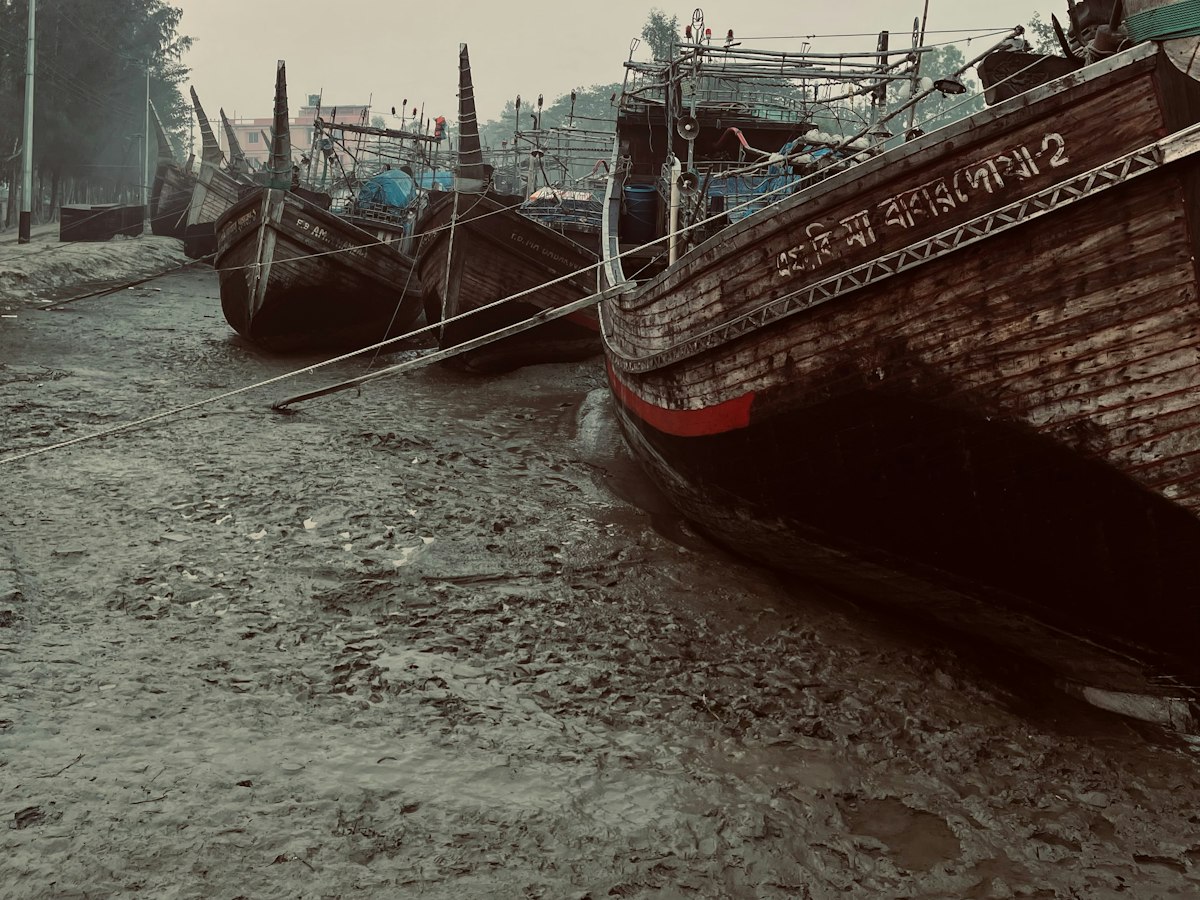
Noakhali, Chattogram

Nijhum Dwip

A quiet island national park south of Hatiya, where herds of spotted deer graze among keora mangroves and migratory birds crowd the mudflats in winter.

Local food to try

  • Fresh sea fish

    Nijhum Dwip

    The day’s catch, fried or in curry, at the eateries of Namar Bazar.

  • Crab and shrimp

    Nijhum Dwip

    Cooked to order when available — ask in the morning.

  • Buffalo-milk curd

    Nijhum Dwip

    From the buffalo herds of Hatiya’s chars.

Where to eat

  • Namar Bazar eateries

    Nijhum Dwip

    Simple rice-and-fish meals; many guesthouses also cook for their guests.

    Open in Google Maps (opens in a new tab)
  • Oskhali bazaar

    Hatiya town

    More choice on the way in or out, in Hatiya’s main town.

    Open in Google Maps (opens in a new tab)

Where to stay

  • Guesthouses and resorts at Namar Bazar

    Nijhum Dwip

    Simple rooms near the beach and forest; book ahead for winter weekends.

    Open in Google Maps (opens in a new tab)
  • Hotels in Hatiya town

    Oskhali, Hatiya

    Useful if you arrive late or need to break the journey.

    Open in Google Maps (opens in a new tab)

History

Nijhum Dwip — "the silent island" — is young land. It rose from the silt of the Meghna estuary in the mid-twentieth century, south of Hatiya, and was settled slowly by fishermen and farmers from nearby islands.

From the 1970s the Forest Department planted keora mangroves across the island to hold the new land against storms and tides, and in the late 1970s a few pairs of spotted deer were released here. With no large predators, they multiplied into the herds that are now the island’s great sight. In 2001 the island’s forest and surroundings were declared Nijhum Dwip National Park.

Winter brings flocks of migratory birds to the mudflats and channels, while the southern shore opens onto a long, empty beach facing the Bay of Bengal. There is little here beyond forest, water, villages and sky — which is exactly why people make the long journey.

Tour plans

Two nights on Nijhum Dwip

3 days
  1. Step 1: Cross to Hatiya

    Leave Maijdee early for Chairman Ghat and cross the Meghna to Hatiya, or arrive by the overnight launch from Dhaka.

  2. Step 2: On to Nijhum Dwip

    Ride across Hatiya to Moktaria ghat, take the boat over the channel and settle in at Namar Bazar.

  3. Step 3: Sunset on the beach

    Walk to the beach near Namar Bazar for the evening and a fish supper.

  4. Step 4: Deer at dawn

    With a local guide, go by boat or on foot into the forest early to see the spotted deer and the birds on the mudflats.

  5. Step 5: Head back

    On the third morning, return by the same route; start early so you cross the Meghna in daylight.

Plan your visit

Best time to visit

November to February, for calmer crossings, cool weather and migratory birds

How to get there

From Maijdee, take a bus or CNG to Chairman Ghat in Subarnachar (about 1.5 hours), then a sea truck, trawler or speedboat across the Meghna to Nalchira ghat on Hatiya. Cross Hatiya by motorbike or CNG to Moktaria ghat, take a short boat over the channel to Nijhum Dwip, then a motorbike to Namar Bazar. Allow most of a day; crossings depend on tide and weather, so check locally. From Dhaka, an overnight launch from Sadarghat to Hatiya avoids the mainland leg.

Getting around

  • Motorbikes with drivers carry visitors between the landing ghat, Namar Bazar and the beach.
  • To reach the deer forests and canals, hire a small boat or walk with a local guide.
  • The beach and forest edges near Namar Bazar are walkable.

Travel tips

  • Avoid the crossings in rough weather and during cyclone signals; in the monsoon the estuary can be dangerous and services may stop.
  • Wear a life jacket on trawlers and speedboats, and keep valuables in a waterproof bag.
  • Deer are easiest to see early in the morning and near dusk; go with a local guide and move quietly.
  • Electricity and mobile coverage can be limited — carry a power bank, a torch and some cash.
  • Bring mosquito repellent and shoes that can get muddy.
  • Leave no plastic behind; the island is a protected national park.

Discover