
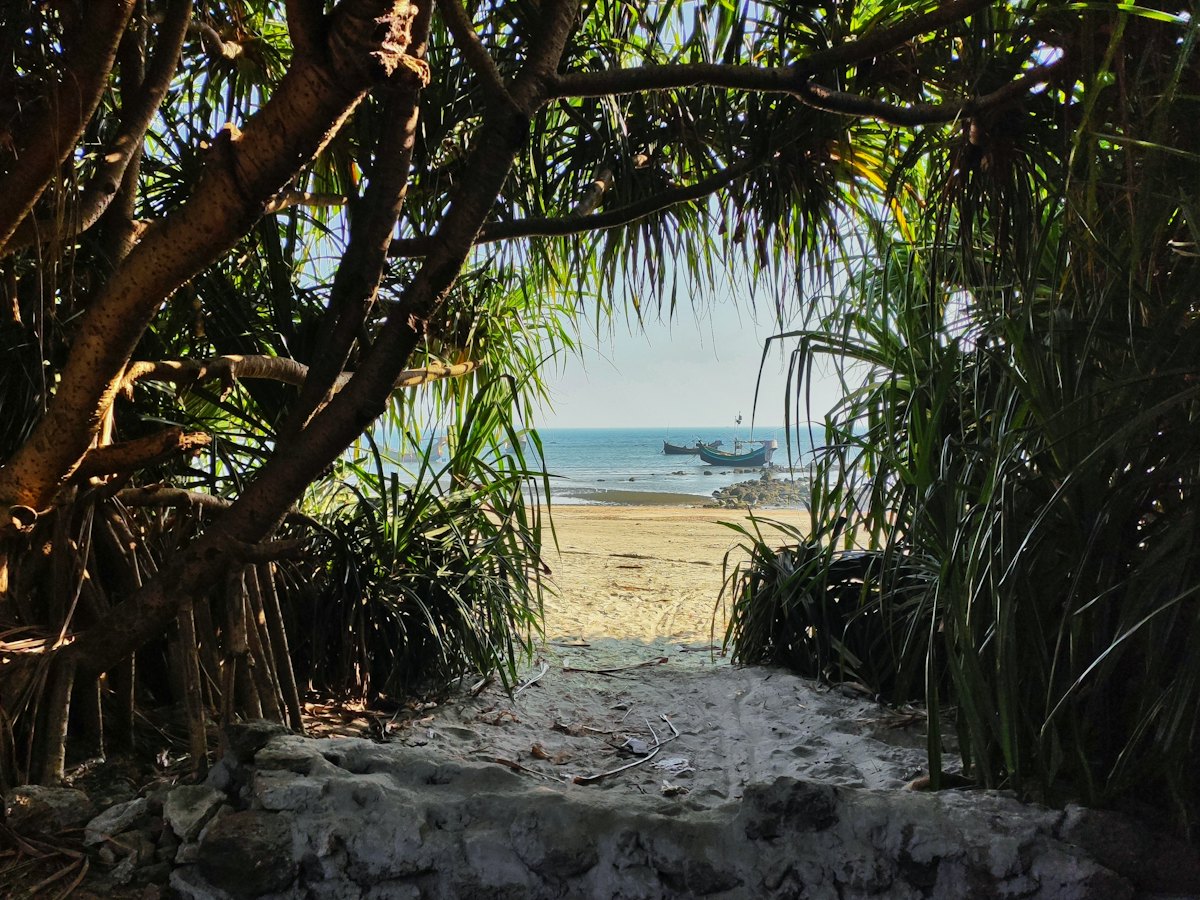
Cox's Bazar, Chattogram

Saint Martin's Island

Bangladesh's only coral island. Visits are limited and seasonal, so check the current rules first.

Local food to try

  • Green coconut

    Saint Martin's Island

    The island’s own coconuts, cut fresh all along the beach.

  • Fresh fish and lobster

    Saint Martin's Island

    The morning catch, fried or grilled in the evening; ask the price by weight first.

  • Fried coral fish and squid

    Saint Martin's Island

    Small reef fish and squid fried crisp at the beach stalls.

Where to eat

  • Restaurants near the jetty

    Saint Martin's Island

    Simple rice, fish and curry meals; they cook what came in that day.

    Open in Google Maps (opens in a new tab)
  • Beach stalls in the evening

    Saint Martin's Island

    Fish, crab and lobster grilled to order by the sea.

    Open in Google Maps (opens in a new tab)

Where to stay

  • Island guesthouses and cottages

    Saint Martin's Island

    Simple places to stay near the jetty and the beaches — but overnight stays may be restricted or not allowed under the current rules, so check before you book.

    Open in Google Maps (opens in a new tab)
  • Teknaf or Cox’s Bazar

    Saint Martin's Island

    If you cannot stay the night, sleep on the mainland and make the island a day trip by ship.

    Open in Google Maps (opens in a new tab)

Culture

Most islanders live by fishing, and life follows the sea and the season. In the morning the boats come in at the jetty and the catch is sold on the spot; coconut palms, small fields and fish drying in the sun fill the rest of the island.

It is a conservative, close-knit community: dress modestly away from the beach and ask before photographing people.

History

Saint Martin’s Island is a small island in the Bay of Bengal off the southern tip of Teknaf, and the only coral island in Bangladesh. Locally it is called Narikel Jinjira, “coconut island”, for the coconut palms that line its shore. At its southern end, a smaller islet called Chhera Dwip is cut off at high tide.

The island is home to a fishing community and to coral, seaweed, turtles and reef fish rarely seen elsewhere in the country. It has been declared an ecologically critical area, because years of unplanned building, crowds and plastic have done real damage to its reefs and beaches.

To protect it, the government now limits when the island can be visited, how many people may go and whether they may stay the night. These rules have changed from year to year, so check the current ones before planning anything. Those who go find clear water, coconut palms and a slow island pace.

Tour plans

A day on Saint Martin’s Island

1 day
  1. Step 1: Ship to the island

    Board early with your ticket and documents in hand; the crossing is part of the trip, so sit out on deck.

  2. Step 2: Walk the western beach

    Head from the jetty to the quieter west coast, with its coral rocks and coconut palms.

  3. Step 3: Fish lunch near the jetty

    Eat the day’s catch with rice, and drink a coconut in the shade.

  4. Step 4: Chhera Dwip, if time allows

    Go by boat or bicycle to the southern tip, look at the coral without touching it, and leave well before the tide turns.

  5. Step 5: Back to the ship

    Be at the jetty well before the return sailing — the ship will not wait.

Plan your visit

Best time to visit

Only in the permitted winter season, roughly November to February; check the current dates and rules first

How to get there

By ship only, and only in the winter season. Ships leave from Cox’s Bazar or Teknaf, and the government limits visitor numbers and overnight stays, so check the current rules and buy the ship ticket before you plan the trip.

Getting around

  • The island is small and flat, so walking is the easiest way to get about.
  • Bicycles can be rented near the jetty for riding around the coast.
  • Vans (pedal or battery) carry people and luggage between the jetty and the beaches.
  • Boats cross to Chhera Dwip when the sea allows; at low tide you can also walk across, but come back before the tide turns.

Travel tips

  • Check the current rules on visitor numbers, permitted dates and overnight stays before you buy anything, and carry the documents they ask for.
  • Do not touch, break or collect coral, shells or stones, and do not walk on live coral at low tide.
  • Bring nothing disposable you cannot take back: carry your plastic and rubbish off the island.
  • Turtles nest on the beaches — no lights, fires or loud music on the sand at night.
  • Do not swim far out, and stay off the rocks at Chhera Dwip as the tide comes in; the sea around the island can turn rough quickly.
  • Carry cash and a power bank: ATMs, electricity and mobile signal can be limited.

Discover