
Bagerhat, Khulna

Sixty Dome Mosque

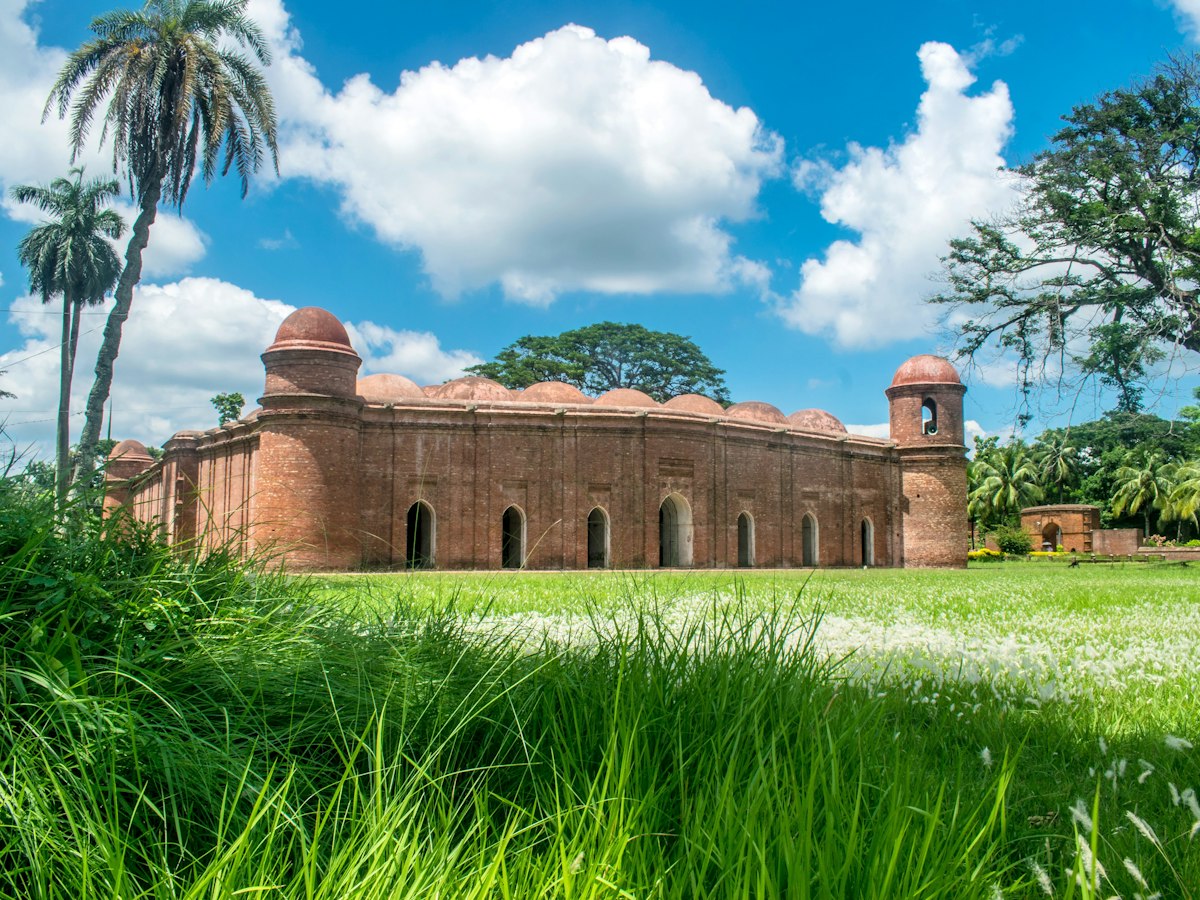
The great fifteenth-century brick mosque of Khan Jahan Ali, the largest of the Sultanate period in Bangladesh and the heart of the UNESCO-listed Mosque City of Bagerhat.

Local food to try

  • Golda prawn curry

    Sixty Dome Mosque

    Bagerhat’s own giant river prawns, as a malai curry or bhuna.

  • Chui jhal

    Sixty Dome Mosque

    Meat cooked with the peppery chui stem, the region’s signature dish.

  • Green coconut

    Sixty Dome Mosque

    Fresh coconut water from the roadside sellers, welcome on a hot day.

Where to eat

  • Bagerhat town

    Bagerhat Sadar

    Restaurants in the centre for a rice-and-curry lunch.

    Open in Google Maps (opens in a new tab)
  • Stalls near the mosque

    Shat Gombuj

    Tea, snacks and green coconuts by the entrance.

    Open in Google Maps (opens in a new tab)

Where to stay

  • Khulna city

    About 1 hour away

    Most visitors stay in Khulna and see the Mosque City as a day trip.

    Open in Google Maps (opens in a new tab)
  • Bagerhat town

    Bagerhat Sadar

    A few simple hotels, close to the monuments.

    Open in Google Maps (opens in a new tab)

History

The Sixty Dome Mosque (Shat Gombuj Masjid) was built in the mid-fifteenth century by Khan Jahan Ali as the great mosque of his town, Khalifatabad. Despite its name it has 77 domes over the prayer hall, in seven rows of eleven, carried on 60 stone pillars — one explanation of the name. Squat round towers stand at the four corners, and the thick brick walls are decorated with terracotta.

It is the largest mosque of the Sultanate period in Bangladesh and the centrepiece of the Historic Mosque City of Bagerhat, a UNESCO World Heritage Site since 1985. The mosque is still used for prayers.

Around it lie other monuments of Khalifatabad: the large Ghora Dighi tank beside the mosque, the single-domed Singair Mosque across the road, and further out the Nine Dome Mosque, Bibi Begni, Chunakhola and Reza Khoda mosques. A small site museum next to the Sixty Dome Mosque explains the history of the city.

Tour plans

A day in the Mosque City

One day
  1. Step 1: Sixty Dome Mosque

    Arrive early from Khulna and walk through the forest of pillars before the crowds.

  2. Step 2: Museum and Ghora Dighi

    Visit the site museum, then walk along the big tank and across to the Singair Mosque.

  3. Step 3: The smaller mosques

    By easy-bike, see the Nine Dome Mosque, Bibi Begni and Chunakhola among the fields.

  4. Step 4: Lunch in town

    Prawn curry and rice in Bagerhat town.

  5. Step 5: Khan Jahan Ali’s tomb

    End the afternoon at the saint’s tomb beside its great tank, then return to Khulna.

Map

Open in Google Maps (opens in a new tab)View larger map (opens in a new tab)

Plan your visit

Best time to visit

November to February, in the morning or late afternoon; avoid prayer times, especially Friday midday

How to get there

On the Khulna road a few kilometres west of Bagerhat town: 10–15 minutes by easy-bike or CNG. Buses from Khulna can drop you at the mosque on the way in.

Getting around

  • Ghora Dighi and the Singair Mosque are a short walk from the Sixty Dome Mosque.
  • For the Nine Dome Mosque, Bibi Begni, Chunakhola and the tomb, use an easy-bike or CNG.

Travel tips

  • Dress modestly; women should cover their hair, and everyone removes shoes inside the prayer hall.
  • Do not walk in front of people praying, and avoid prayer times, especially Friday midday.
  • There is an entry ticket for the site and museum; check the current opening days and hours before you go.
  • Hire an easy-bike for a few hours to see the other mosques and Khan Jahan Ali’s tomb in one go.
  • Carry water and a hat — there is little shade between the monuments.

Discover