
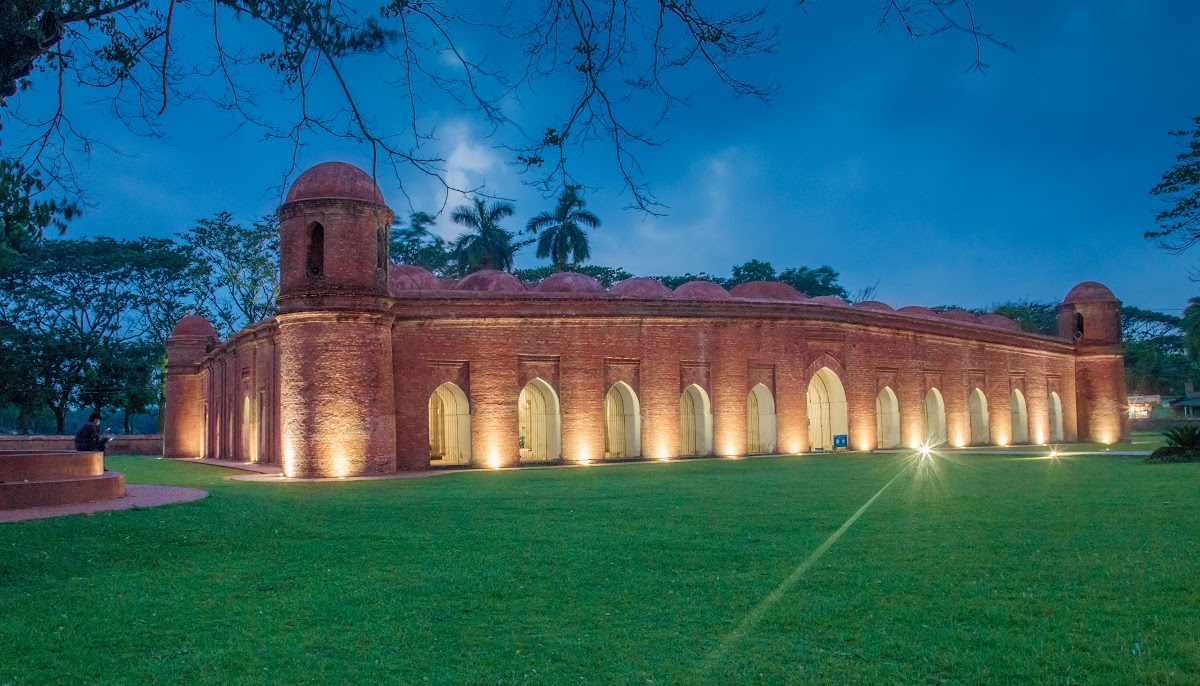
Bagerhat, Khulna
Bagerhat
Home of the UNESCO-listed Mosque City built by Khan Jahan Ali, with the Sixty Dome Mosque at its heart, and gateway to the eastern Sundarbans through Mongla.
Local food to try
Where to eat
Where to stay
Culture
Bagerhat lives between its saint’s legacy and the forest.
- Khan Jahan Ali is deeply revered: pilgrims come to his shrine all year, and many visitors pray at the Sixty Dome Mosque, which is still in use.
- In the south, mawali honey collectors, bawali woodcutters and fishermen work in the Sundarbans, and many honour Bonbibi, the forest’s protector.
- Bagerhat is a heartland of golda prawn farming; paddy fields, prawn ponds and coconut groves fill the countryside.
- Mongla is a port town, with ships at anchor in the Pasur and a steady flow of workers and traders.
History
In the fifteenth century a warrior-saint named Khan Jahan Ali came to this corner of the delta, cleared the forest and founded a town called Khalifatabad. He built mosques, roads, bridges and great water tanks (dighis), and his city of brick became one of the finest of the Bengal Sultanate. He died in 1459 and lies buried in a tomb beside his own tank.
Much of Khalifatabad was later swallowed by the forest, but around fifty of its buildings survive, scattered among the villages and fields west of today’s town. In 1985 UNESCO listed them as the Historic Mosque City of Bagerhat, with the Sixty Dome Mosque as its centrepiece.
Today Bagerhat is a quiet district of rivers, coconut groves and prawn farms. Its southern part reaches deep into the Sundarbans, and Mongla, the country’s second seaport, sits on the Pasur river at the forest’s edge.
Plan your visit
Best time to visit
November to February: cool, dry days for the monuments and the calmest season for Sundarbans boat trips
How to get there
- By bus from Dhaka: across the Padma Bridge via Gopalganj, about 4–5 hours to Bagerhat town; buses also run straight to Mongla.
- From Khulna: frequent buses to Bagerhat take about 1 hour, and to Mongla about 1–1.5 hours, across the Rupsha Bridge.
- By train: the easiest rail option is to Khulna, then on by road.
- By air: the nearest airport is Jashore; from there go by road via Khulna.
Getting around
- The Mosque City monuments are spread over several kilometres: hire an easy-bike or CNG for a few hours to go between the Sixty Dome Mosque, the smaller mosques and Khan Jahan Ali’s tomb.
- Rickshaws and vans work well inside Bagerhat town.
- From Mongla, the Sundarbans are reached only by boat: hired trawlers for Karamjal, or licensed tour boats for longer trips.
- Small ferry boats cross the Pasur at Mongla.