
Brahmanbaria, Chattogram
Brahmanbaria
A river district on the Titas, close to the Tripura border, celebrated as the home of great classical musicians, with old temples and mosques and the sweet chhanamukhi.
Local food to try
Where to eat
Where to stay
Culture
Music runs deep in Brahmanbaria.
- The family of Ustad Alauddin Khan made the district a name in classical music; local music schools carry the tradition on.
- The Titas and its fishing communities live on in literature and film, from Adwaita Mallabarman’s novel to Ritwik Ghatak’s film of it.
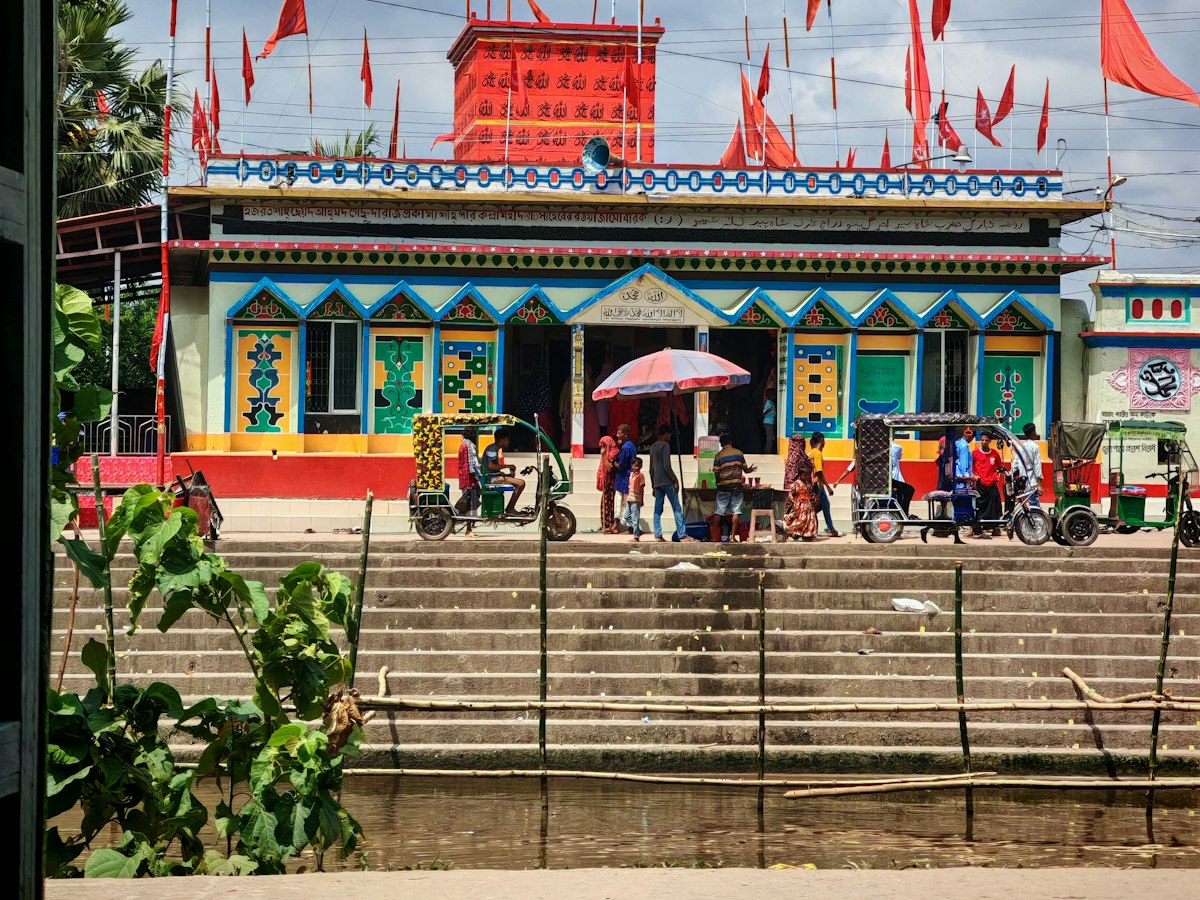
- Shiva Ratri at the Kal Bhairab temple draws large crowds every year.
- Sarail is known for the Sarail hound, a slender hunting dog bred here for generations.
- Boat races on the river are held in some years during the monsoon; check locally.
History
Brahmanbaria lies on the Titas, a gentle river that winds through wetlands and villages before joining the Meghna. The river gave its name to one of the great Bangla novels, **Adwaita Mallabarman’s *Titas Ekti Nadir Naam*** (“A River Called Titas”), about the fishing communities on its banks.
The district is often called the cultural capital of the country. Ustad Alauddin Khan, one of the most important figures in Indian classical music and the teacher of Ravi Shankar and Ali Akbar Khan, was born at Shibpur in Nabinagar, and his family produced generations of musicians, including Ustad Ayet Ali Khan.
The district borders the Indian state of Tripura, and the Akhaura crossing near Agartala has long linked the two sides. In 1971 the border area saw heavy fighting, and Bir Shreshtha Mohammad Mostafa Kamal fell near Akhaura.
The district was carved out of Cumilla in 1984. Today it is also known for the Titas gas field, one of the country’s most important.
Plan your visit
Best time to visit
October to February; the monsoon (July–September) for the Titas in full flow
How to get there
- By bus from Dhaka: about 2.5–3.5 hours via the Dhaka–Sylhet highway, depending on traffic. Buses leave from the Saydabad side of Dhaka.
- By bus from Chattogram: about 4–5 hours via Cumilla.
- By train: Brahmanbaria station is on the main line from Dhaka to Chattogram and Sylhet, and Akhaura is a major junction nearby; several intercity trains stop. Check the current schedule.
Getting around
- Rickshaws and battery auto-rickshaws cover the town; the Kal Bhairab temple is in town at Medda.
- For Sarail and the Arifail Mosque, take a CNG north of town.
- Akhaura is reachable by train or by road.
- In the monsoon, boats on the Titas are the best way to see the river villages; agree on the trip before you board.