
Dinajpur, Rangpur
Dinajpur
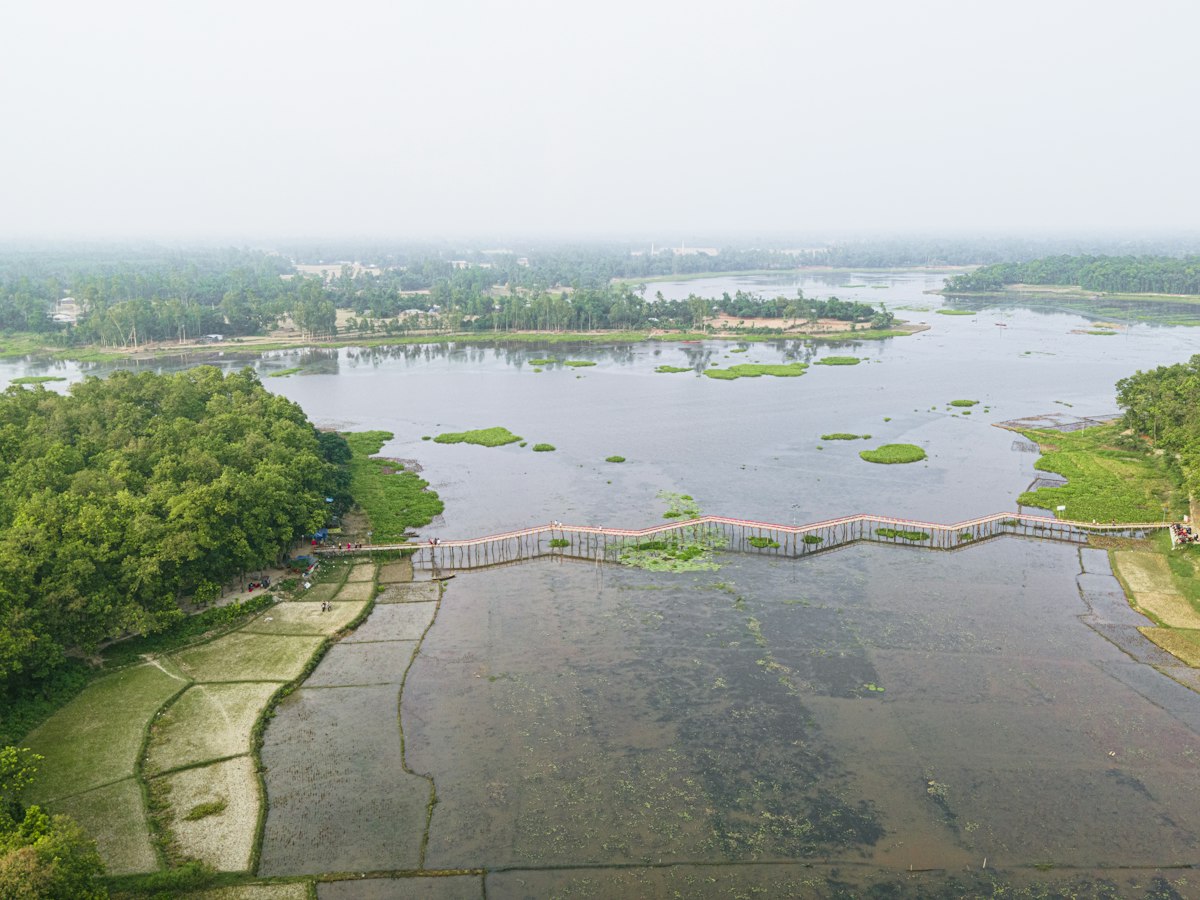
An old district of rice fields and lychee orchards in the north-west, home to the Kantajew Temple — the finest terracotta temple in Bangladesh — the great Ramsagar tank and the ruins of the Dinajpur Rajbari.
Local food to try
Where to eat
Where to stay
Culture
Dinajpur is a meeting place of Bangali, Santal, Oraon and other communities, whose villages, festivals and dances are part of the district’s life.
- The Rash Mela at Kantanagar, around the Rash Purnima full moon in the autumn month of Kartik, draws pilgrims and traders from far away.
- Northern folk music, including Bhawaiya, is heard at fairs and gatherings.
- The district’s fields of fragrant kataribhog rice and its lychee orchards shape the calendar.
History
Dinajpur lies in the old Varendra country of north Bengal, and for centuries it was ruled from the Dinajpur Raj, one of the great zamindar houses of the region. Its rajas left the district its best-known monuments: Maharaja Pran Nath began the Kantajew Temple in the early eighteenth century and his son Ramnath completed it in 1752, and Ramnath also had the vast Ramsagar tank dug south of the town.
The temple’s walls are covered in terracotta — thousands of baked-clay panels telling the Ramayana, the Mahabharata and the story of Krishna, alongside scenes of hunting, processions and daily life in eighteenth-century Bengal.
In 1946–47 Dinajpur was a centre of the Tebhaga movement, when sharecroppers demanded two-thirds of the harvest. Today it is a farming district known across the country for its fine rice and its lychees.
Plan your visit
Best time to visit
October to February for sightseeing; November for the Rash Mela at Kantanagar; late May–June for lychees
How to get there
- By bus: Coaches from Dhaka reach Dinajpur in about 8–9 hours via the Jamuna bridge, mostly as night services.
- By train: Intercity trains run from Dhaka to Dinajpur station, an overnight or full-day journey.
- By air: Saidpur airport, with domestic flights from Dhaka, is about an hour from Dinajpur by road.
- From Rangpur, buses take around 2–3 hours.
Getting around
- In town, rickshaws and battery auto-rickshaws go everywhere, including the Rajbari.
- For Kantajew and Nayabad, take a bus on the Dinajpur–Thakurgaon road or hire a CNG or car for half a day.
- Ramsagar is a short auto-rickshaw ride south of town.