
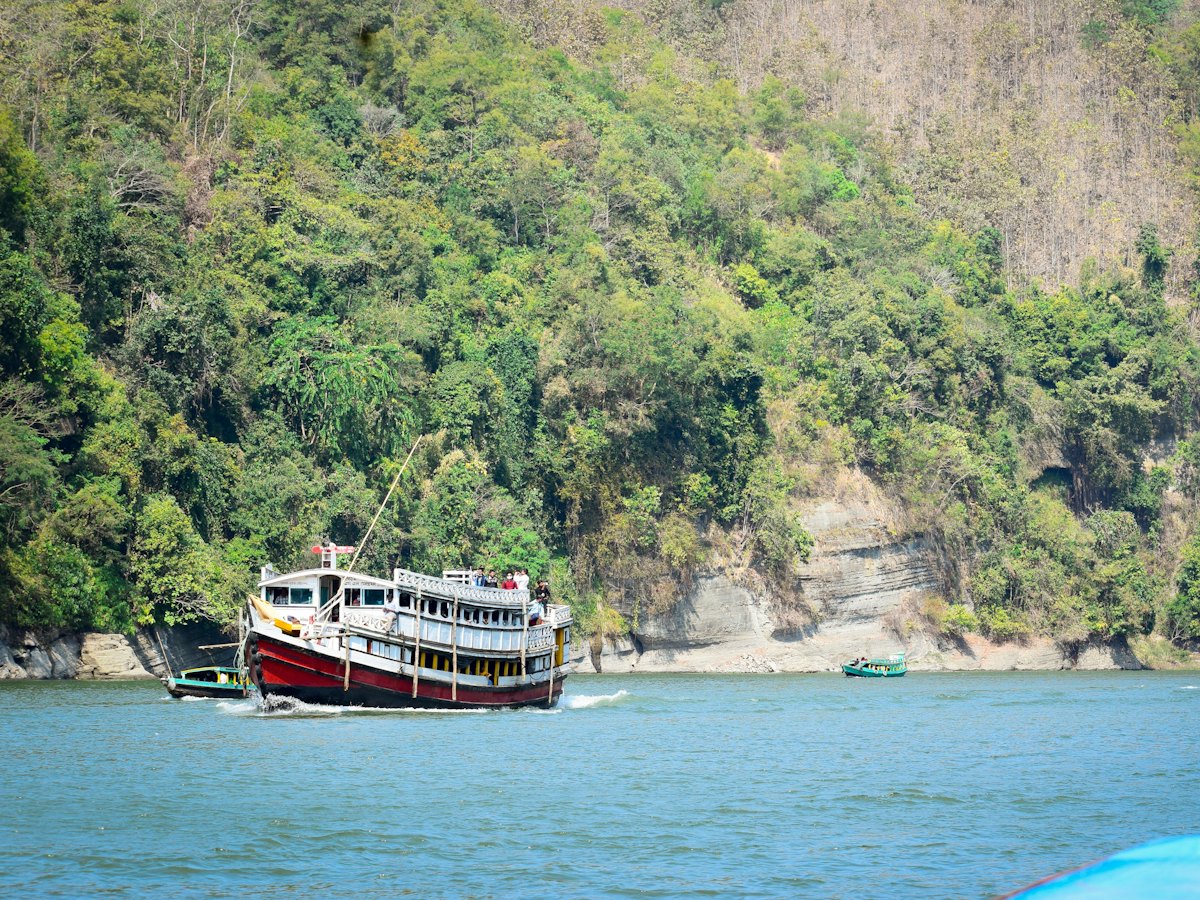
Rangamati, Chattogram

Kaptai Lake

The country's largest man-made lake, with Rangamati's famous hanging bridge.

Local food to try

  • Bamboo chicken

    Kaptai Lake

    Chicken with spices sealed inside a length of green bamboo and cooked over the fire — the hill tracts’ best-known dish.

  • Bamboo shoot curry

    Kaptai Lake

    Young bamboo shoots cooked with fish or meat, a hill favourite.

  • Lake fish

    Kaptai Lake

    Fresh fish from Kaptai Lake, fried or in a light curry with rice.

  • Hill fruit

    Kaptai Lake

    Pineapples, bananas and jackfruit from the hill farms, sold at the floating markets in season.

Where to eat

  • Island restaurants on the lake

    Kaptai Lake

    Several small islands have restaurants serving hill food; a popular lunch stop on a boat trip.

    Open in Google Maps (opens in a new tab)
  • Restaurants in Rangamati town

    Rangamati

    Bengali rice-and-curry places and indigenous restaurants around the bazar areas.

    Open in Google Maps (opens in a new tab)

Where to stay

  • Hotels in Rangamati town

    Rangamati

    From simple hotels to rooms with lake views; staying a night lets you see the lake at sunrise.

    Open in Google Maps (opens in a new tab)
  • Lakeside resorts

    Around Rangamati

    Resorts and cottages by the water, some on islands; book ahead for holidays.

    Open in Google Maps (opens in a new tab)

Culture

Rangamati is the home of the Chakma people and of the Chakma Raja, and Marma, Tripura, Tanchangya and other indigenous communities live around the lake alongside Bengalis.

  • Rajban Vihara, by the lake, is one of the most important Buddhist temples in the hill tracts. Each autumn it holds the Kathin Chibar Dan, when a monk’s robe is woven from raw cotton within a single day and night.
  • Boisabi, the hill peoples’ New Year in mid-April (Biju for the Chakma, Sangrai for the Marma, Boisu for the Tripura), is celebrated with flowers floated on the water, feasts and visits between homes.
  • Chakma women’s handwoven cloth — the pinon and hadi — is sold in Rangamati’s markets and craft shops.
  • The Tribal Cultural Institute museum in town is a good introduction to the hill communities.

History

Kaptai Lake is the largest man-made lake in Bangladesh, spreading through the valleys of the Rangamati hills like a great branching hand of blue water. It was created in the early 1960s, when the Kaptai Dam was built across the Karnaphuli river for a hydroelectric power plant.

The lake has a painful history. Its waters drowned a large area of farmland and villages, including the old town of Rangamati and the palace of the Chakma Raja, and tens of thousands of people — most of them Chakma — lost their homes and land. Many moved elsewhere in the hills or across the border. That story is still remembered in the hill tracts.

Today the lake is the heart of Rangamati and one of the most beautiful landscapes in the country: green hills rising straight from the water, small islands, floating markets and fishing boats. Visitors come for the hanging bridge, for boat trips to waterfalls and island restaurants, and for the Buddhist temples and indigenous culture of the town.

Tour plans

Rangamati and Kaptai Lake

2 days, 1 night
  1. Step 1: Morning bus to Rangamati

    Leave Chattogram early, keep your ID ready for the checkpoints, and check in to your hotel.

  2. Step 2: The hanging bridge

    Walk across the hanging bridge in the afternoon and watch the sun set over the lake.

  3. Step 3: Boat to Shuvolong

    Next morning, hire a boat for the day and head through the hills to the Shuvolong waterfall.

  4. Step 4: Lunch on an island

    Stop at an island restaurant for bamboo chicken and lake fish.

  5. Step 5: Rajban Vihara and back

    Visit Rajban Vihara on the way back, then take an afternoon bus to Chattogram.

Plan your visit

Best time to visit

October to March for cool weather and calm water. Shuvolong falls run strongest in the monsoon, when the hanging bridge may be under water.

How to get there

Buses from Chattogram reach Rangamati in about 2.5–3 hours. The hanging bridge is in town; boats on the lake leave from the ghats nearby.

Getting around

  • Engine boats for the lake are hired by the hour, half day or full day from the ghats near the hanging bridge and in town; agree the route, time and price first.
  • A typical trip takes in the hanging bridge, an island restaurant, Rajban Vihara and the Shuvolong waterfall; Shuvolong is the farthest and needs most of a day.
  • In town, CNGs and rickshaws run between the bazar, the ghats and the hanging bridge.
  • Small country boats cross the narrower channels for local villages.

Travel tips

  • Wear a life jacket on every boat, and make sure the boat carries enough for everyone before you set off.
  • Do not swim in the lake, and do not take boats out in storms or after dark.
  • Carry your national ID card or passport: there are security checkpoints on the roads in the hill tracts. Foreign visitors may need a permit — check the current rules before travelling.
  • Rules for visiting some parts of the hill tracts change from time to time; ask locally before going beyond Rangamati town.
  • Dress modestly and take off your shoes at Buddhist temples.
  • Ask before photographing people, especially in villages.

Discover