
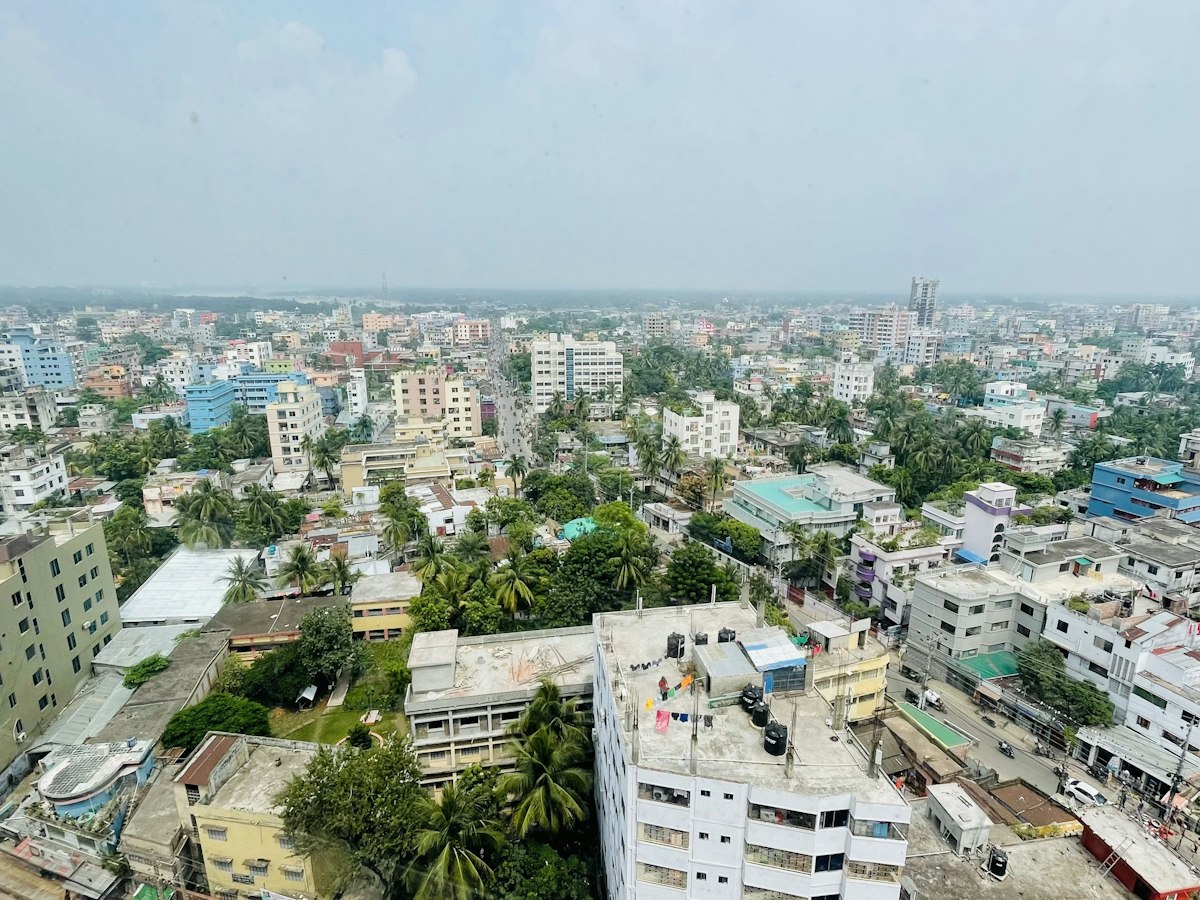
Khulna
Khulna
A river city on the Rupsha and the main gateway to the Sundarbans, known for its prawns, chui jhal mutton and the Tagore family’s roots nearby.
Local food to try
Where to eat
Where to stay
Culture
Life in Khulna follows the rivers and the forest to the south.
- The mawali honey collectors and bawali wood and golpata cutters of Dacope and Koyra go into the Sundarbans in season, and many pray to Bonbibi, the forest’s protector, honoured by Hindus and Muslims alike.
- Fishing and shrimp farming shape the countryside: bagda (tiger prawn) ponds near the coast and golda (giant river prawn) farms further inland.
- Rabindranath Tagore’s family roots are traced to Pithabhog in Rupsha upazila, and his wife Mrinalini Devi came from Dakshindihi in Phultala, where her family home is now a museum.
- Khulna is a working city of jute mills, the shipyard and the port trade, with a lively university crowd.
History
Khulna grew up where the Bhairab and the Rupsha meet, on the edge of the tidal delta that runs south into the Sundarbans. For centuries the rivers were its roads, carrying rice, timber, golpata leaves and honey from the forest to the markets of Bengal. In 1882 Khulna became a district of its own, and the town became the capital of the south-west.
In the twentieth century Khulna grew into an industrial city: jute mills, a shipyard and the factories of Khalishpur lined the riverbanks, and the seaport at nearby Mongla opened the region to the world. Today Khulna is one of the country’s largest cities, home to Khulna University and KUET, and a base for shrimp exporters and Sundarbans tour boats.
The district also carries painful memory: in May 1971, Chuknagar in the west of the district saw one of the largest massacres of the Liberation War, of refugees on their way to India. South of the city, Dacope and Koyra are low, tidal lands at the edge of the forest, hit hard by Cyclone Aila in 2009.
Plan your visit
Best time to visit
November to February for cool, dry weather and Sundarbans trips; avoid the cyclone months of May and October–November if travelling by boat
How to get there
- By bus from Dhaka: across the Padma Bridge, about 4–5 hours, with day and night departures. Before the bridge the trip took much longer by ferry, so check that your bus takes the bridge route.
- By train: intercity trains run from Dhaka to Khulna station, some over the Padma Bridge rail link; Khulna also has trains to Jashore, Kushtia and Rajshahi.
- From nearby cities: frequent buses from Jashore (about 1.5 hours), Bagerhat (about 1 hour) and Satkhira (about 2 hours).
- By air: there is no airport in Khulna; the nearest domestic flights land at Jashore, about 1.5 hours away by road.
Getting around
- In the city, use rickshaws, battery easy-bikes and CNG auto-rickshaws.
- Boats cross the Rupsha from the city ghats all day; small boats can be hired for a short river trip.
- For Bagerhat, Mongla, Satkhira and Dakshindihi, take intercity buses from the city’s bus terminals, or hire a car for the day.
- Sundarbans trips usually leave from Khulna or Mongla on licensed tour boats, with meals, guide and permits arranged by the operator.