
Kurigram, Rangpur
Kurigram
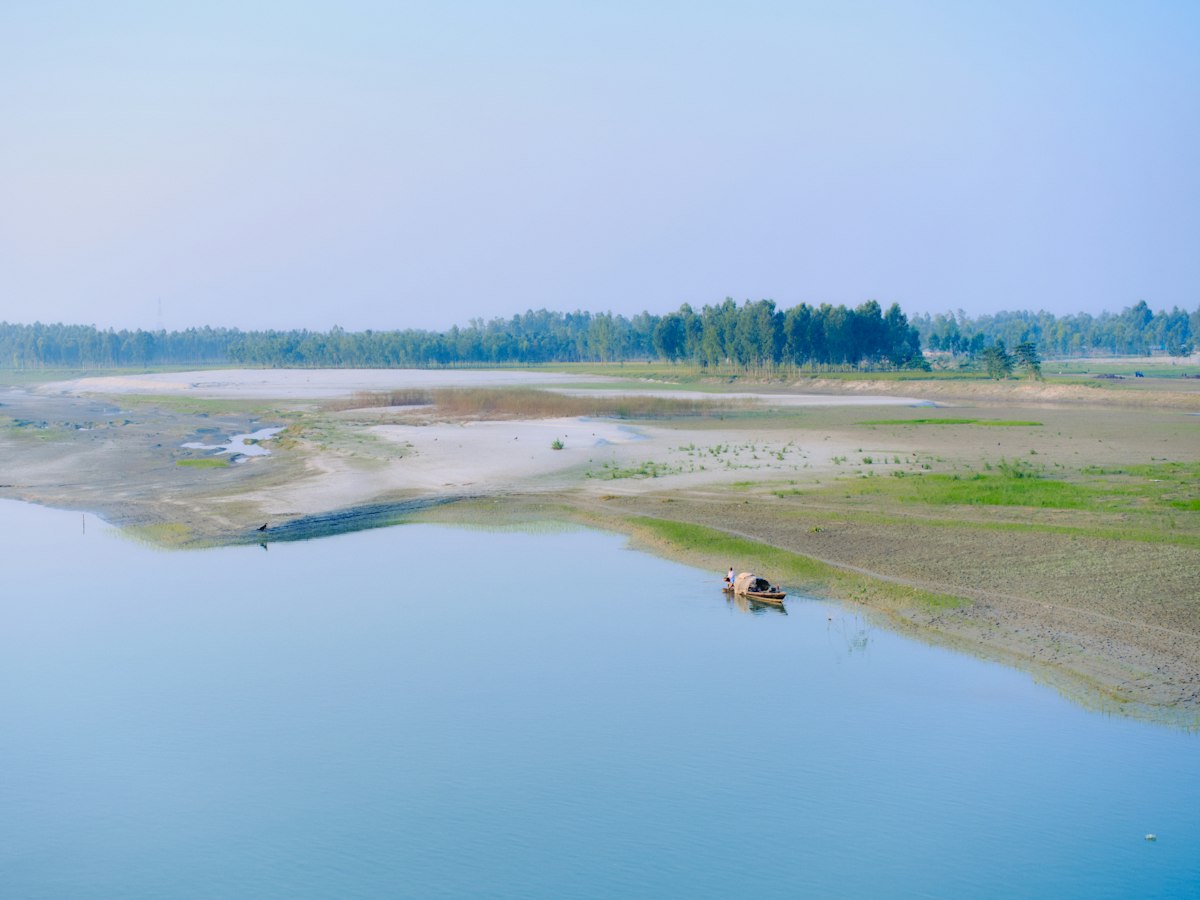
A district of great rivers, where the Brahmaputra enters Bangladesh and the Teesta, Dharla and Dudhkumar flow in — a land of chars, river boats and the old Chilmari port of Bhawaiya song.
Local food to try
Where to eat
Where to stay
Culture
Kurigram is deep in Bhawaiya country. The slow, lilting songs of the north, sung to the dotara, are full of cart drivers, boatmen and river ports — Chilmari among them.
- Char life is the district’s defining culture: families farm the sandbanks, keep cattle, and rebuild their homes when the river takes the land.
- River haats (markets) at the ghats are where char people come to buy and sell, and are among the liveliest places to see.
History
Kurigram lies in the far north-east of the Rangpur region, where the Brahmaputra enters Bangladesh from India. The Teesta, the Dharla and the Dudhkumar all run through the district, and much of its land is made up of chars — sandbanks and river islands that rise, shift and vanish with the floods.
The district was a subdivision of Rangpur until 1984. Its rivers have always been its roads: Chilmari, on the Brahmaputra, was long a busy river port, and its name lives on in Bhawaiya songs of the north.
Kurigram is among the poorest districts in the country, hit hard by floods and river erosion, and winters here are cold and foggy. For a traveller, it offers wide rivers, char villages and a sense of the north far from the usual routes.
Plan your visit
Best time to visit
October to March, when the rivers are calmer and the chars are dry; avoid the monsoon floods
How to get there
- Bus: coaches from Dhaka run to Kurigram via the Jamuna bridge and Rangpur, about 9–11 hours, mostly overnight.
- Train: a direct intercity train runs between Dhaka and Kurigram; check the current timetable.
- Air: the nearest airport is Saidpur, with flights from Dhaka; continue by road via Rangpur.
Getting around
- In Kurigram town, use rickshaws and battery auto-rickshaws.
- For Ulipur and Chilmari, take a local bus or hire a CNG.
- Engine boats and country boats connect the river ghats with the chars and the far banks of the Brahmaputra; ask at the ghat about current services and go only in good weather.