
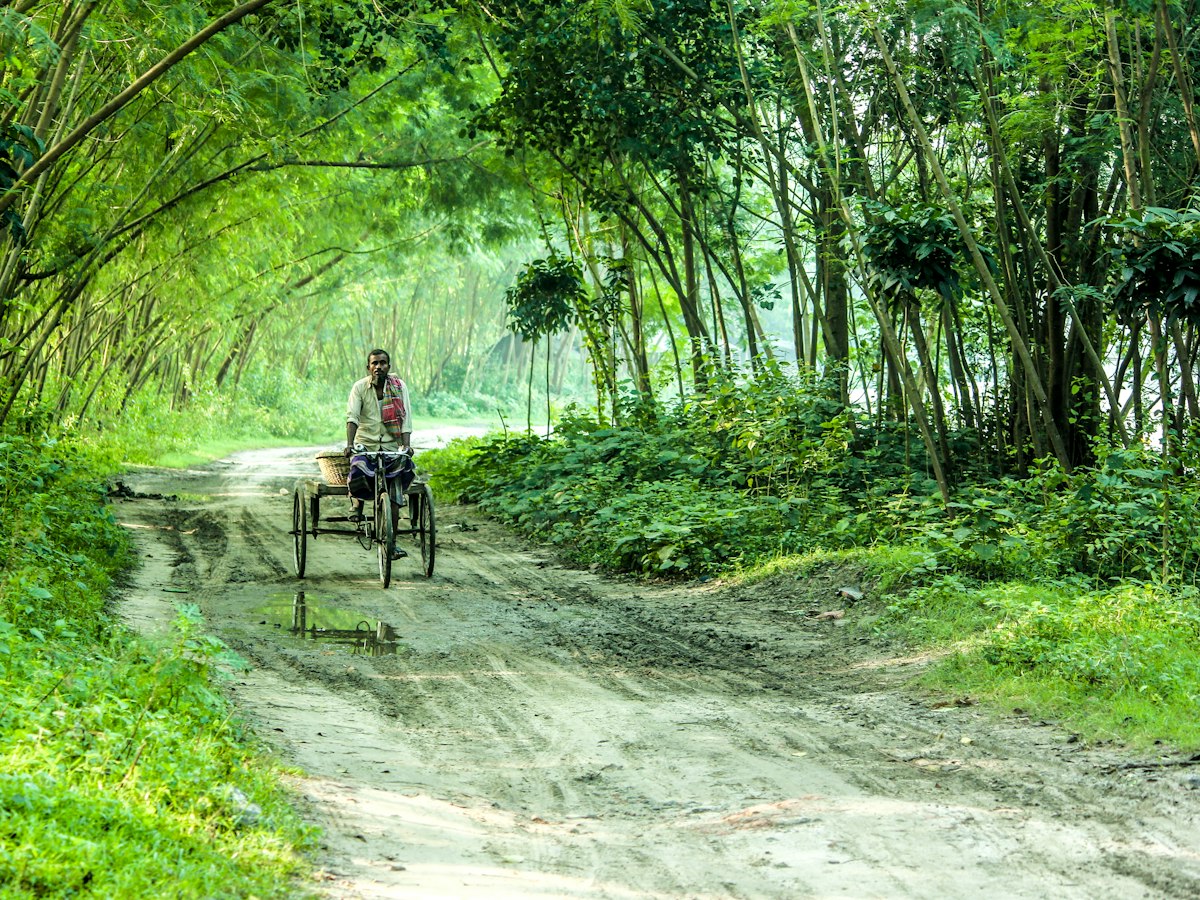
Kushtia, Khulna
Kushtia
Often called the cultural capital of Bangladesh: home of Lalon Shah’s shrine at Cheuria, Rabindranath Tagore’s Kuthibari at Shilaidaha and the birthplace of Mir Mosharraf Hossain, on the banks of the Padma and the Gorai.
Local food to try
Where to eat
Where to stay
Culture
Kushtia’s soul is music. Lalon Shah (Lalon Fakir), who died in 1890, sang of the human being above caste and creed, and his songs are the heart of the Baul tradition. Bauls and devotees still gather at his akhra in Cheuria.
- Lalon festivals: a spring gathering at Dol Purnima, a custom begun in Lalon’s own lifetime, and the commemoration of his death in mid-October (1 Kartik). For days the grounds fill with singers, ektara players and visitors; dates follow the calendar, so check locally.
- Tagore at Shilaidaha: Rabindranath spent long spells here in the 1890s and later, writing poems, stories and letters by the Padma; his birth anniversary in Boishakh is marked at the Kuthibari.
- Literature and the press: Mir Mosharraf Hossain and Kangal Harinath, whose Grambarta Prakashika was printed at Kumarkhali, are remembered across the district.
- Handloom: Kumarkhali is known for weaving — lungis, gamchhas and bedcovers.
History
Kushtia sits where the Gorai leaves the Padma, in the old Nadia country of western Bengal. Under British rule it belonged to Nadia district; when Bengal was divided in 1947, the eastern part became Kushtia district. The railway arrived early — the line from Calcutta reached Kushtia in 1862 — and the town grew as a river and rail trading post.
Few districts have given Bengal so many voices. The mystic singer Lalon Shah lived and is buried at Cheuria; Rabindranath Tagore managed his family’s estates from Shilaidaha and wrote much of his work there; Mir Mosharraf Hossain, author of Bishad Sindhu, was born at Lahinipara; and the journalist Kangal Harinath printed his paper at Kumarkhali. The revolutionary Bagha Jatin was also born in the district.
Today Kushtia is a busy, friendly town of handloom weavers, river fish and music. Most visitors come for Lalon’s shrine and Shilaidaha, both an easy ride from the centre.
Plan your visit
Best time to visit
October to March; the Lalon gatherings at Cheuria fall at Dol Purnima in spring and in mid-October
How to get there
- By bus from Dhaka: about 5–7 hours depending on the route — via the Padma Bridge and Rajbari, or via the Jamuna bridge and Pabna over the Lalon Shah Bridge. Day and night buses run from Gabtoli and other Dhaka terminals.
- From nearby cities: buses link Kushtia with Jashore, Khulna, Jhenaidah, Chuadanga, Meherpur, Pabna and Rajshahi; Jhenaidah and Chuadanga are around 1–1.5 hours, Rajshahi and Khulna a few hours.
- By train: Kushtia lies on the old railway; some intercity trains stop at stations in the district such as Poradah and Bheramara, and local trains reach Kushtia Court station. Check current timetables.
Getting around
- The town centre is easy on foot or by rickshaw and battery auto-rickshaw.
- Lalon’s shrine at Cheuria is a short auto-rickshaw ride from the centre.
- For Shilaidaha, Kumarkhali and Lahinipara, take a CNG or auto-rickshaw, or hire one for half a day to see them together.
- Local buses run to the upazila towns; ask for the stand in town.