
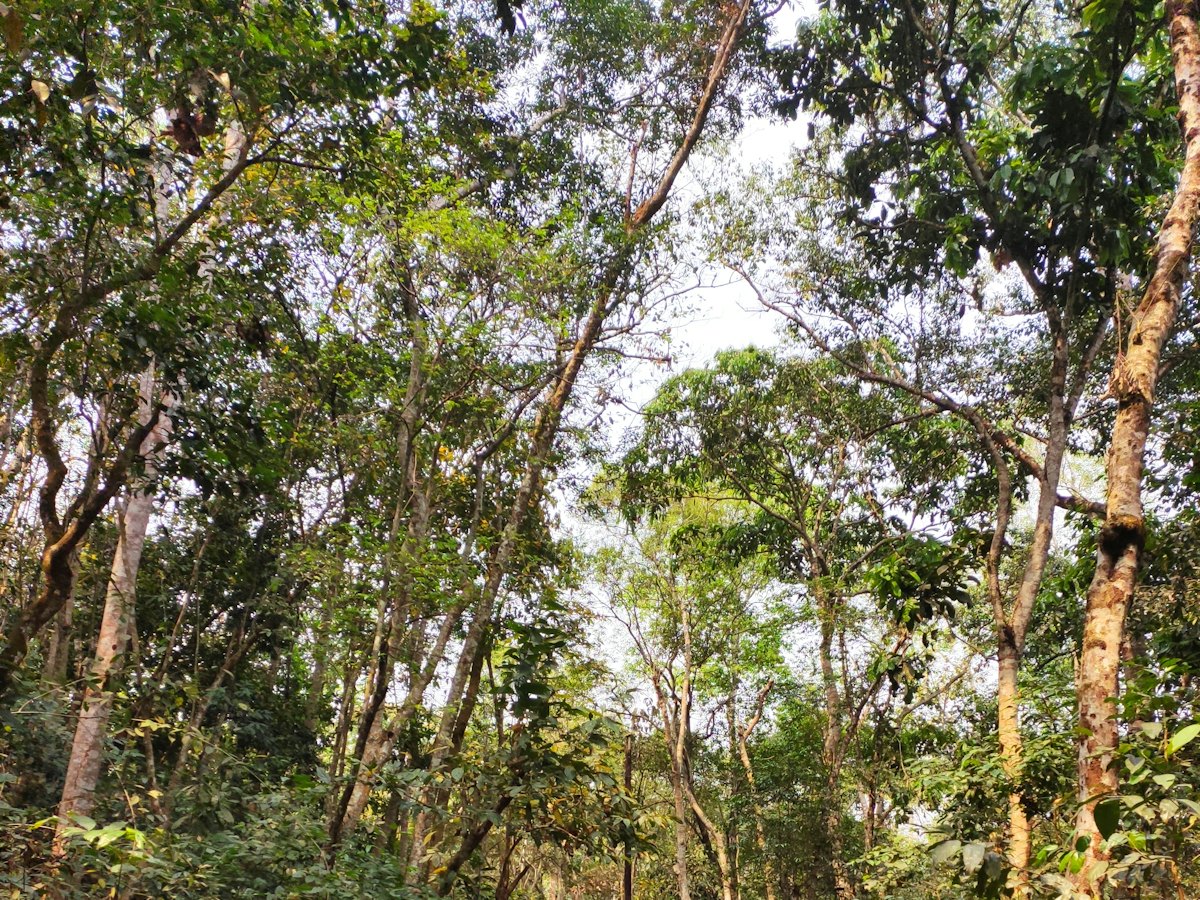
Moulvibazar, Sylhet

Lawachara National Park

Rainforest trails and the home of the hoolock gibbon, with a railway line running through.

Local food to try

  • Seven-layer tea

    Lawachara National Park

    Back in Sreemangal, the town’s famous layered tea is a good reward after the walk.

  • Khasi paan

    Lawachara National Park

    Betel leaf grown in the Khasi village in the forest.

  • Pineapple

    Lawachara National Park

    Sweet local pineapple from the surrounding hill gardens, in season.

Where to eat

  • Stalls at the park entrance

    Lawachara

    Tea, water and snacks; bring your own water for longer trails.

    Open in Google Maps (opens in a new tab)
  • Sreemangal town

    Sreemangal

    Proper meals and Nilkantha Tea Cabin’s seven-layer tea, 15–20 minutes away.

    Open in Google Maps (opens in a new tab)

Where to stay

  • Tea resorts around Sreemangal

    Sreemangal, Moulvibazar

    Cottages and resorts in the tea gardens, some within a short drive of the park — ideal for an early start.

    Open in Google Maps (opens in a new tab)
  • Sreemangal town hotels

    Sreemangal

    Simpler, cheaper hotels in town.

    Open in Google Maps (opens in a new tab)

Culture

A Khasi village lies inside the forest, where families grow betel leaf on vines climbing the trees. Nearby, the villages of Kamalganj are home to the Manipuri community, known for its dance and handloom weaving. Visit respectfully and ask before photographing people or homes.

History

Lawachara National Park, near Sreemangal in Kamalganj upazila, is one of the best-known rainforests in Bangladesh. It is a patch of tall, mixed evergreen forest on low hills, protected as a national park since the 1990s, and much of it was planted or managed in the British period.

It is above all the home of the hoolock gibbon, the only ape found in Bangladesh, whose loud whooping calls echo through the forest in the early morning. Capped langurs, macaques, many birds, and insects and reptiles of every kind live here too.

One odd feature is the railway line that runs straight through the forest, part of the Dhaka–Sylhet line; seeing a train emerge from the trees is part of Lawachara’s charm, and a scene from the 1956 Hollywood film Around the World in 80 Days is said to have been shot here. Inside the park there is also a Khasi village, where families grow betel leaf.

Tour plans

A morning in Lawachara

Half a day
  1. Step 1: Dawn — leave Sreemangal

    Take a CNG to the park gate as early as it opens.

  2. Step 2: The forest trail

    Walk one of the marked trails slowly and quietly, listening for gibbons and birds.

  3. Step 3: The railway line

    See the line cutting through the trees — from a safe distance, off the tracks.

  4. Step 4: Late morning — back for tea

    Return to Sreemangal for breakfast or an early lunch and a cup of seven-layer tea.

Plan your visit

Best time to visit

October to March for dry trails; the forest is lushest in the rainy season but muddy, with leeches. Go early morning for wildlife.

How to get there

About 8 km from Sreemangal town on the Kamalganj road: 15–20 minutes by CNG.

Getting around

The park is explored on foot. From the entrance, marked trails of different lengths — from a short loop of under an hour to a walk of a few hours — lead through the forest. Ask at the entrance which trails are open and whether a guide is needed.

Travel tips

  • Go early. The gibbons call in the first hours after sunrise, and the forest is quieter before the crowds arrive.
  • Keep quiet and do not play music; you will see far more wildlife.
  • Wear long trousers and closed shoes. In the rainy season, tuck trousers into socks against leeches and bring salt.
  • Take care at the railway line: trains do run through the forest, so do not stand or sit on the tracks.
  • Stick to the marked trails; for the longer walks, a local guide is a good idea and may be required — ask at the entrance.
  • Do not feed the monkeys or leave litter.

Discover