
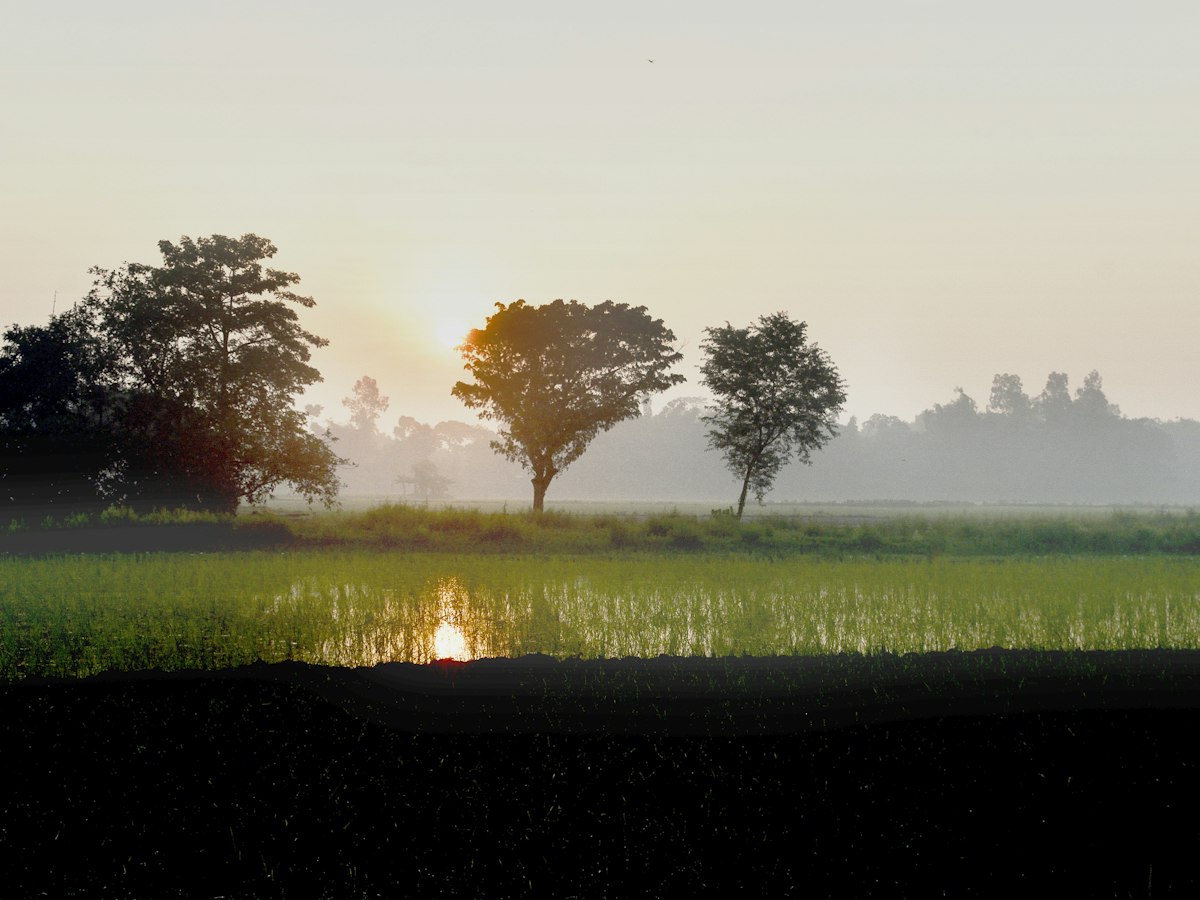
Naogaon, Rajshahi
Naogaon
The rice bowl of the north-west, rich in Varendra heritage: Paharpur’s great monastery, the black-stone Kusumba Mosque, the Kaivarta pillar of Dibar Dighi and Tagore’s estate house at Patisar.
Local food to try
Where to eat
Where to stay
Culture
Naogaon is a farming district with deep roots, and its year follows the rice.
- Rabindranath Tagore’s birthday is marked at Patisar each year with songs, readings and a village fair.
- Santal, Oraon and other indigenous communities live in the Barind villages, with their own festivals, music and dance.
- Nabanna, the harvest festival, and Pohela Boishakh fairs are celebrated across the district.
- Look for clay and bamboo crafts at village markets.
History
Naogaon lies at the heart of the ancient Varendra country. Its most famous monument, the Somapura Mahavihara at Paharpur, was built by the Pala kings in the 8th century and was one of the largest Buddhist monasteries south of the Himalayas; it is now a UNESCO World Heritage Site.
In the 11th century Varendra rose against the Palas under the Kaivarta leader Divya — one of the earliest recorded peasant revolts in Bengal — and the stone pillar of Dibar Dighi is linked with that time. Later came Sultanate mosques like Kusumba, and under the British the Naogaon area became famous for its regulated ganja cultivation.
In the 1890s the Tagore family’s Kaligram estate brought Rabindranath Tagore to Patisar, where he wrote, ran the estate and started a farmers’ bank. Naogaon became a district in 1984. Today it is one of the country’s great rice districts, its roads lined with rice mills, and its Barind uplands are now known for mangoes too.
Plan your visit
Best time to visit
October to March for the heritage sites; June–July for Barind mangoes
How to get there
- From Dhaka: buses take about 5–6 hours via the Jamuna bridge and Bogura.
- From Rajshahi: about 2 hours by bus.
- From Bogura: about 1.5 hours by bus.
- By train: Naogaon town is not on a main line; the nearest major station is Santahar junction, a short drive away, served by trains from Dhaka and Rajshahi. Check current schedules.
Getting around
- Rickshaws and battery auto-rickshaws in town.
- The district is large and the sights are spread out: local buses run to Manda, Badalgachhi, Patnitala, Dhamoirhat and Atrai, but a hired car or CNG for the day saves a lot of time.
- Paharpur is in Badalgachhi upazila; Kusumba is on the Rajshahi road; Patisar is reached from Atrai.
- Agree fares and waiting time before you set off.