
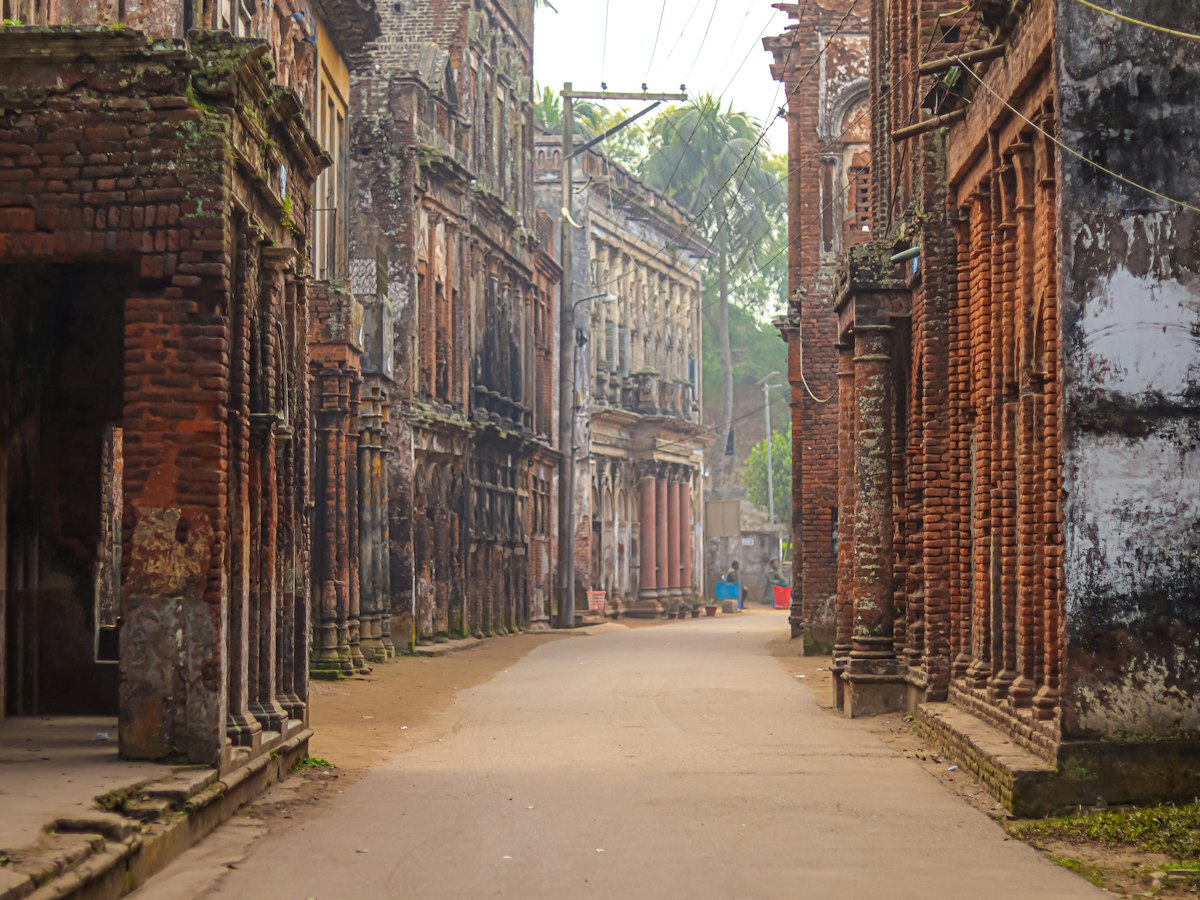
Narayanganj, Dhaka
Narayanganj
Dhaka’s old river port on the Shitalakshya, once the heart of the jute trade, and home to Sonargaon, the medieval capital of Bengal with its Panam City, folk-art museum and Mughal river forts.
Local food to try
Where to eat
Where to stay
Culture
Narayanganj carries both the memory of medieval Bengal and the energy of an industrial river town.
- Jamdani: the handwoven figured sari, recognised by UNESCO as intangible cultural heritage, is woven in the villages of Rupganj and Sonargaon; weavers’ markets sell directly.
- Folk arts: the Folk Arts and Crafts Foundation at Sonargaon keeps alive nakshi kantha, pottery, wood and cane work, and holds a folk fair in the winter months.
- Langalbandh: each spring, Hindu pilgrims gather at Langalbandh on the Old Brahmaputra for the Ashtami Snan, a holy bath that draws huge crowds.
- River life: launches, cargo boats and ferries keep the Shitalakshya busy day and night.
History
Long before Dhaka rose, Sonargaon was a capital of eastern Bengal. Under the independent sultans it was a seat of government and a mint town, and travellers such as Ibn Battuta passed through. In the late 16th century it was the base of Isa Khan, leader of the Bara Bhuiyans who resisted the Mughals.
The Mughals guarded the river approaches to Dhaka with a chain of water forts, and two of them still stand in Narayanganj, at Hajiganj and Sonakanda, facing each other across the Shitalakshya.
In the British era, Narayanganj grew into one of Bengal’s great river ports. Raw jute from across the delta was baled and shipped here, and later the Adamjee Jute Mills, once among the largest in the world, stood on the river’s bank. The mills are gone, but the city remains a busy port and industrial town, now known for knitwear.
The district is also the home of Jamdani, the fine figured muslin weave of the Dhaka region, still woven by hand in the villages of Rupganj and Sonargaon.
Plan your visit
Best time to visit
November to February; the Sonargaon folk fair is usually held in winter — check dates locally
How to get there
- By bus: buses from Dhaka’s Gulistan and Jatrabari run to Narayanganj city (Chashara) in about 1 hour, depending on traffic. For Sonargaon, take a Chattogram- or Cumilla-bound bus on the Dhaka–Chattogram highway to Mograpara, about 1–1.5 hours.
- From Chattogram, Cumilla and Sylhet: long-distance buses pass Kanchpur and Mograpara on their way into Dhaka.
- By train: commuter trains run between Kamalapur and Narayanganj stations.
- By launch: Narayanganj’s river terminal has launches to Chandpur and other southern river towns.
Getting around
- Rickshaws and battery autos within Narayanganj city.
- Ferries and small boats cross the Shitalakshya between the city and Bandar.
- CNG auto-rickshaws from Mograpara to Panam City, the folk-art museum and Goaldi Mosque, which are all close together.
- A hired car or CNG for the day makes it easy to see the river forts and Sonargaon together.