
Netrokona, Mymensingh
Netrokona
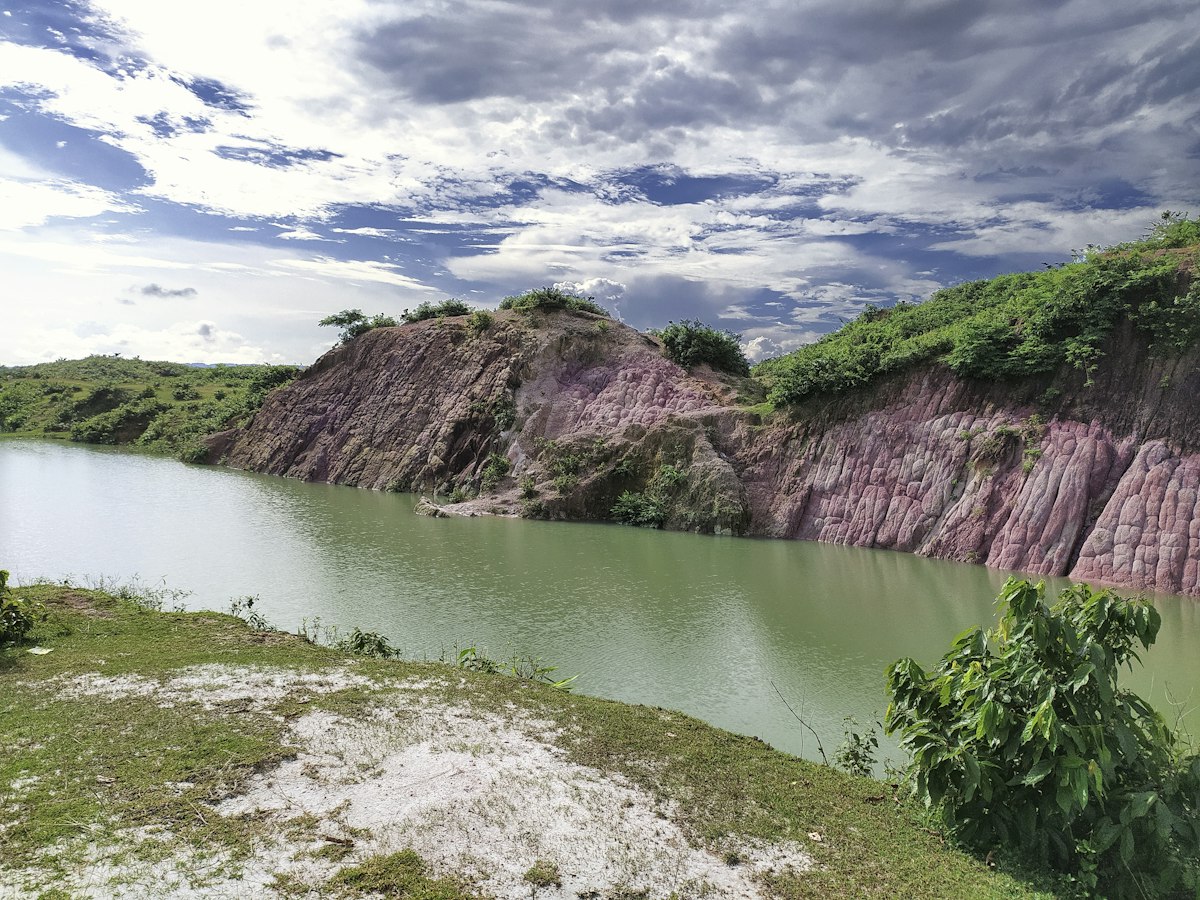
A land of haors, baul songs and the Garo Hills’ edge, where the Someshwari river at Birishiri and the blue-green clay lakes of Bijoypur draw travellers north.
Local food to try
Where to eat
Where to stay
Culture
The north of the district is home to the Garo (Mandi) and Hajong peoples, along with smaller communities such as the Koch. Many Garo are Christian, and old mission churches stand on the hills around Durgapur.
- The Birishiri cultural academy for the region’s ethnic communities stages music and dance, especially around festivals.
- Wangala, the Garo harvest festival, is celebrated after the harvest, usually in the late autumn.
- The south is baul country: the songs of Ukil Munshi and Jalal Khan, and the ballads of the Mymensingh Gitika, are still sung at village gatherings.
History
Netrokona stretches from the foot of the Garo Hills in the north to the wide haors of the south. In the north, around Durgapur and Kalmakanda, the hills of Meghalaya rise just across the border, and the Someshwari river comes down from them with clear water and sand.
This was the land of the Susang zamindars of Durgapur, and later of the Tonk movement of the 1940s, when Hajong and other peasants rose against a crop-rent system; Hajong women such as Rashimoni Hajong are remembered as its martyrs.
Netrokona is also one of Bangladesh’s great homes of folk music. Many of the Mymensingh Gitika ballads were gathered here, and the district gave the country baul and folk poets such as Ukil Munshi and Jalal Khan. In the monsoon the southern haors — around Mohanganj, Madan and Khaliajuri — turn into an inland sea.
Plan your visit
Best time to visit
November to March for Birishiri and Bijoypur; July to September for the haors in flood
How to get there
- By bus: buses from Dhaka’s Mohakhali terminal run to Netrokona town in about 4–5 hours via Mymensingh. Some buses go on directly to Durgapur and Birishiri, about 5–6 hours in all.
- By train: trains from Dhaka run via Mymensingh to Netrokona and Mohanganj, about 5–6 hours; check the current timetable.
- From Mymensingh, buses and CNGs reach Netrokona town in about an hour and a half.
Getting around
- In Netrokona town, rickshaws and auto-rickshaws.
- For Birishiri and Durgapur, take a bus or CNG north from the town, or a direct bus from Dhaka.
- Around Durgapur, motorbikes, auto-rickshaws and boats across the Someshwari reach Bijoypur and the border villages.
- For the haors, go to Mohanganj or Madan and hire a boat in the monsoon.