
Nilphamari, Rangpur
Nilphamari
A quiet northern district where the Teesta enters Bangladesh: the Teesta Barrage at Dalia, the old Nilsagar lake, and Saidpur, the railway town with the region’s airport.
Local food to try
Where to eat
Where to stay
Culture
Nilphamari shares the culture of the old Rangpur region.
- Bhawaiya, the slow, lilting folk song of the north, is sung to the dotara; its songs of cart drivers, boatmen and longing are still heard at fairs and on local stages.
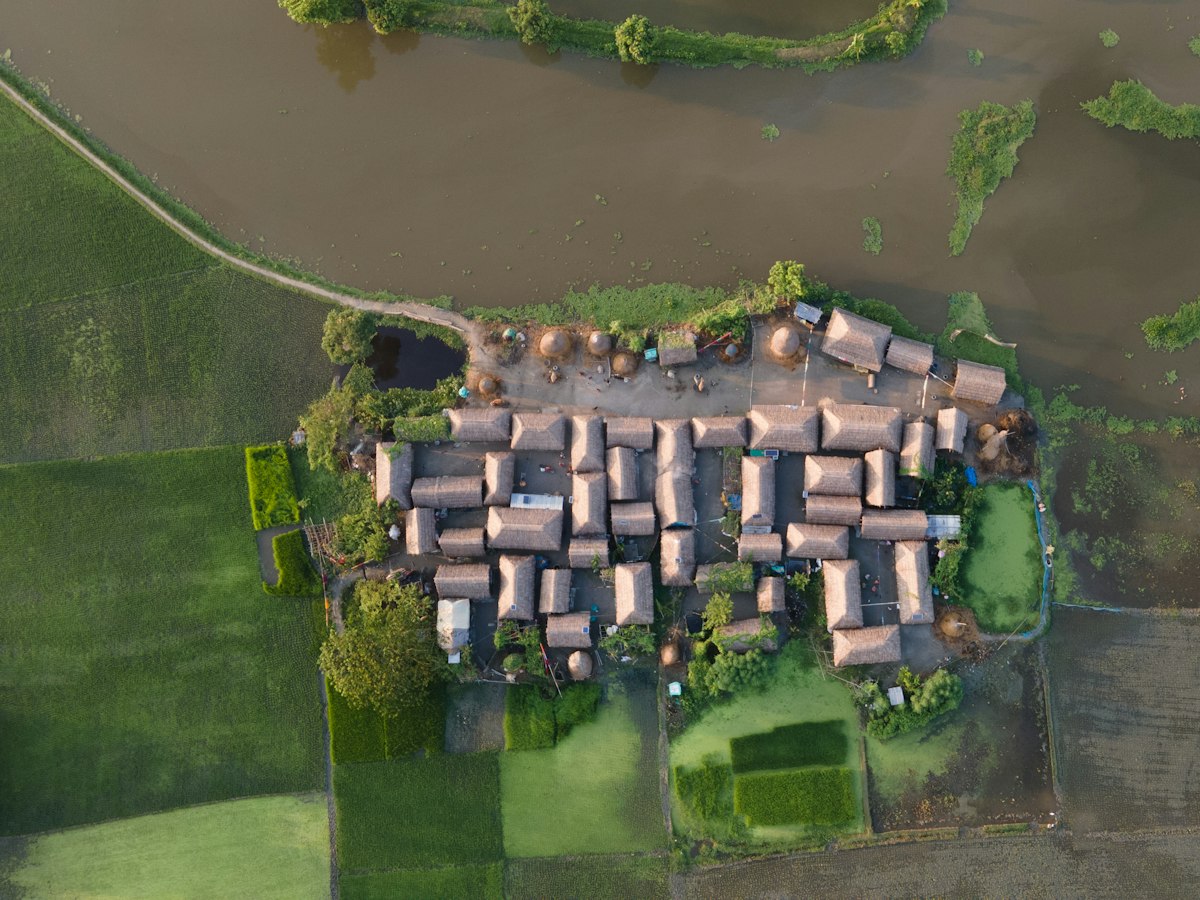
- Along the Teesta, char families farm the sandbanks and move with the river when floods reshape the land.
- Saidpur has a distinct railway-town life and an Urdu-speaking community whose food — kebabs, parathas and rich meat dishes — is part of the town’s character.
History
Nilphamari lies in the far north-west of the Rangpur region, on flat, fertile land between the Teesta and the smaller rivers that drain towards it. The name is usually linked to the indigo (nil) farms of the British period, when European planters grew indigo across the north. It was a subdivision of Rangpur until it became a district in 1984.
The Teesta enters Bangladesh in Nilphamari, and the district’s best-known landmark is the Teesta Barrage at Dalia, which feeds a large irrigation project across the greater Rangpur region.
Saidpur, in the south of the district, grew up around the railway: its workshop, set up in 1870, is one of the oldest and largest in the country. The town still has a strong railway character and a large Urdu-speaking community, and its airport is the gateway to the whole north.
Plan your visit
Best time to visit
October to March; winter brings migratory birds to Nilsagar, but mornings are cold and foggy
How to get there
- Bus: coaches from Dhaka run to Nilphamari and Saidpur via the Jamuna bridge and Rangpur, about 8–10 hours, with day and night departures.
- Train: intercity trains between Dhaka and Chilahati stop at Saidpur and Nilphamari; check the current timetable.
- Air: Saidpur Airport has domestic flights from Dhaka of about an hour. From Saidpur, Nilphamari town is a short road trip.
Getting around
- In Nilphamari and Saidpur towns, use rickshaws and battery auto-rickshaws.
- For Nilsagar, Dimla and the Teesta Barrage, take a local bus or hire a CNG or car for the day.
- On the Teesta, small country boats cross to the chars; ask at the ghat and go only in calm weather.