
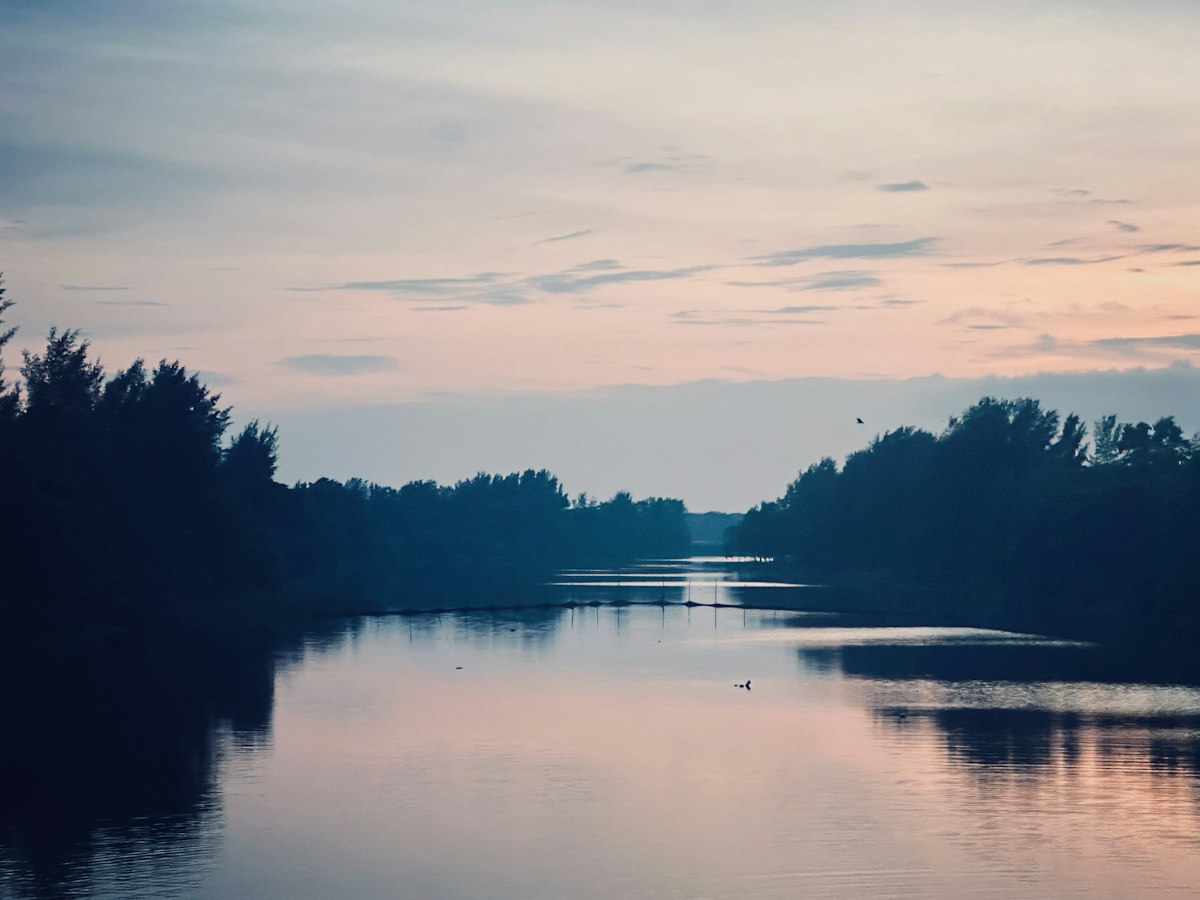
Noakhali, Chattogram
Noakhali
A coastal district on the Meghna estuary, known for its lively dialect, Gandhi’s 1946 peace mission and the island of Nijhum Dwip, home to spotted deer and mangroves off Hatiya.
Local food to try
Where to eat
Where to stay
Culture
Noakhali’s dialect is one of the most recognisable in Bangladesh — fast, full of its own words and much loved (and teased) across the country.
- Life in the south is shaped by the chars: newly risen islands of silt where families farm, fish and graze buffalo, and where erosion and new land are part of every generation’s story.
- Fishing for hilsa and sea fish on the Meghna estuary supports much of the coast, especially around Hatiya.
- Eid, Durga Puja and village fairs bring the markets alive; Chowmuhani’s bazaars are busy year-round.
- Many families have members working abroad, and their links shape the towns’ homes, shops and festivals.
History
Noakhali lies where the Meghna meets the Bay of Bengal, on land the rivers are still building. The area was long known as Bhulua; the name Noakhali — "new canal" — is usually traced to a canal dug to drain floodwater. The river has also taken land back: the old district town was swallowed by the Meghna in the mid-twentieth century, and the headquarters moved inland to Maijdee, where it remains.
In October 1946 Noakhali was struck by communal riots. Mahatma Gandhi came in November and stayed for about four months, walking barefoot from village to village to restore calm and trust between neighbours. The Gandhi Ashram at Jayag in Sonaimuri keeps that memory, with a museum on his Noakhali mission.
The district also honours Bir Sreshtho Ruhul Amin, one of the seven highest-decorated heroes of the 1971 Liberation War, who came from Sonaimuri. Today Noakhali is a busy, outward-looking place: Chowmuhani is a long-established trading town, people from the district work across Bangladesh and abroad, and new chars and islands — Hatiya and Nijhum Dwip above all — give it a wild, watery edge.
Plan your visit
Best time to visit
November to February, when the Meghna is calmer for the crossing to Hatiya and Nijhum Dwip
How to get there
- By bus from Dhaka: buses run to Maijdee (Noakhali town) and Chowmuhani through the day and night, about 4–5 hours depending on traffic.
- By bus from Chattogram: about 3–4 hours via Feni.
- By train: the Dhaka–Noakhali intercity train runs to Noakhali station at Maijdee.
- By launch to Hatiya: overnight launches from Dhaka’s Sadarghat go to Hatiya, the usual way to reach Nijhum Dwip without crossing the mainland.
Getting around
- In Maijdee and Chowmuhani, rickshaws and battery auto-rickshaws cover short trips.
- CNG auto-rickshaws and local buses link Maijdee, Chowmuhani, Sonaimuri and Subarnachar.
- For Hatiya, go to Chairman Ghat in Subarnachar and cross the Meghna by sea truck, trawler or speedboat; services depend on tide and weather, so check locally.
- On Hatiya and Nijhum Dwip, motorbikes and CNGs are the main transport, with small boats across the channels.