
Sylhet

Ratargul Swamp Forest

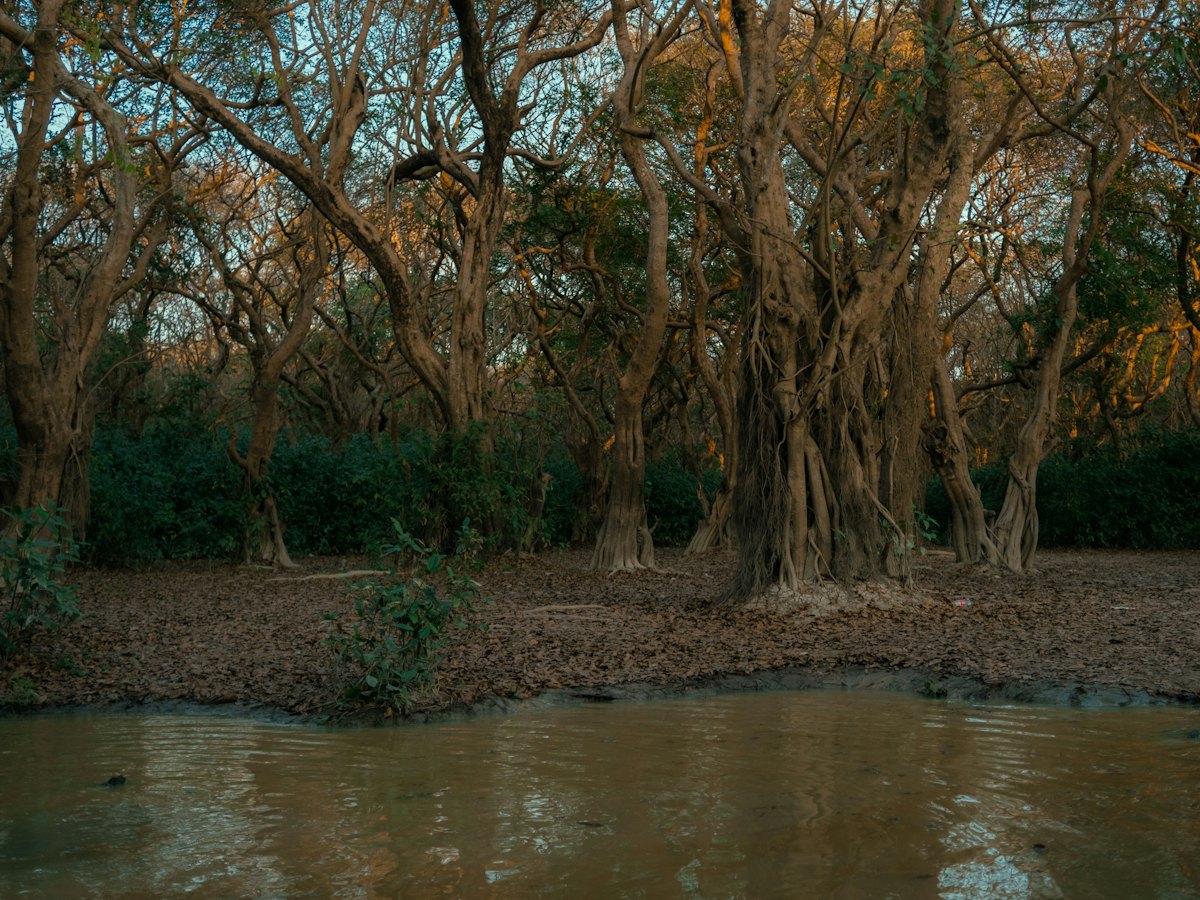
A freshwater forest standing in water for much of the year, explored by small wooden boat.

Local food to try

  • Haor and river fish

    Ratargul Swamp Forest

    Small freshwater fish cooked as curry or bhorta, the everyday food of the villages around the forest.

  • Tea and snacks at the ghat

    Ratargul Swamp Forest

    Tea, biscuits and fried snacks at the stalls by the boat ghat.

Where to eat

  • Stalls at the boat ghat

    Ratargul

    Tea and light snacks only; there is little choice for a full meal, so eat in Sylhet before or after.

    Open in Google Maps (opens in a new tab)
  • Sylhet city restaurants

    Zindabazar, Sylhet

    Rice with bhortas, fish and satkora beef in the city’s long-running local restaurants.

    Open in Google Maps (opens in a new tab)

Where to stay

  • Sylhet city hotels

    Sylhet city

    Ratargul is a half-day trip from the city; there is nowhere to stay at the forest itself.

    Open in Google Maps (opens in a new tab)

History

Ratargul is one of the few freshwater swamp forests left in Bangladesh. For several months of the rainy season the trees stand in water, their trunks submerged and their crowns meeting overhead, and the only way through is by small wooden boat along the channels. It lies in Gowainghat, close to the Gowain river, and is protected by the Forest Department.

The forest is made of trees that can live with their roots underwater for months, such as koroch and hijal, and in the green half-light it can feel far from anywhere. Birds, monkeys and, yes, snakes live here; the forest is home to wildlife that has few such places left in the country.

People sometimes call it the "Amazon of Bangladesh". It is much smaller than that, but gliding silently between half-drowned trees is a rare experience. In the dry winter months the water falls and much of the forest floor is exposed, so the season you go matters a great deal.

Tour plans

A morning in Ratargul

Half a day
  1. Step 1: Early — drive to the ghat

    Leave Sylhet early by CNG or car; mornings are cooler and the forest is quieter.

  2. Step 2: At the ghat — hire a boat

    Agree the fare and how long you will be out, and put on life jackets.

  3. Step 3: Into the forest

    Spend one to two hours gliding between the trees; ask the boatman to stop at the watchtower if it is open.

  4. Step 4: Midday — back to Sylhet

    Return for lunch in the city, leaving the afternoon free for the shrines or Keane Bridge.

Plan your visit

Best time to visit

June to October, when the forest stands in water. In winter the water drops and the boats cannot go far in.

How to get there

About an hour by CNG or car from Sylhet city to the boat ghat at Motorghat. Hire a small boat there to go into the forest.

Getting around

Inside the forest there are no paths in the wet season: small wooden boats, rowed by local boatmen, take you along the channels between the trees. Larger engine boats cannot go in, which is what keeps it quiet.

Travel tips

  • Wear the life jacket if one is offered, and keep children seated — the boats are small and tip easily.
  • Keep your hands out of the branches. Snakes rest in the trees; do not grab or shake them.
  • Be quiet. The forest is at its best when you can hear the birds, and loud music disturbs wildlife and other visitors.
  • Bring a hat or umbrella for sun and rain, and a dry bag for your phone.
  • Take nothing in that you will not bring out: no plastic bottles or wrappers in the water.
  • Agree the boat fare and route before you set off; ask whether the watchtower is part of the trip.

Discover