
Moulvibazar, Sylhet

Sreemangal tea gardens

The tea capital of Bangladesh: walk the estates and try the famous seven-layer tea.

Local food to try

  • Seven-layer tea

    Sreemangal tea gardens

    Tea poured in distinct coloured layers, Sreemangal’s best-known treat. Drink it slowly, layer by layer.

  • Fresh garden tea

    Sreemangal tea gardens

    Plain red or milk tea made with leaf from the local estates; buy loose tea to take home.

  • Pineapple

    Sreemangal tea gardens

    Sweet local pineapple from the hill gardens, sold by the roadside in season (roughly the summer and rainy months).

  • Satkora beef and bhortas

    Sreemangal tea gardens

    Sylheti home-style rice meals at the local restaurants in town.

Where to eat

  • Nilkantha Tea Cabin

    Sreemangal

    The place that made seven-layer tea famous.

    Open in Google Maps (opens in a new tab)
  • Restaurants in Sreemangal town

    Sreemangal

    Local restaurants in the town centre serving rice, fish, bhortas and curries.

    Open in Google Maps (opens in a new tab)

Where to stay

  • Tea resorts and cottages

    Around Sreemangal

    Cottages and resorts set among the tea gardens, from simple to upmarket; book ahead for weekends.

    Open in Google Maps (opens in a new tab)
  • Town hotels

    Sreemangal town

    Simpler hotels near the bus stand and railway station, handy if you arrive late.

    Open in Google Maps (opens in a new tab)

Culture

  • Tea communities: the garden workers, descended from people brought from across India in the British period, keep their own languages and festivals in the labour lines.
  • Manipuri villages around Kamalganj are known for Manipuri dance and handwoven cloth, sold in shops around Sreemangal.
  • Khasi villages (punji) in the hills grow betel leaf on forest trees.
  • Respect the communities’ privacy: they are not attractions, and a polite question goes a long way.

History

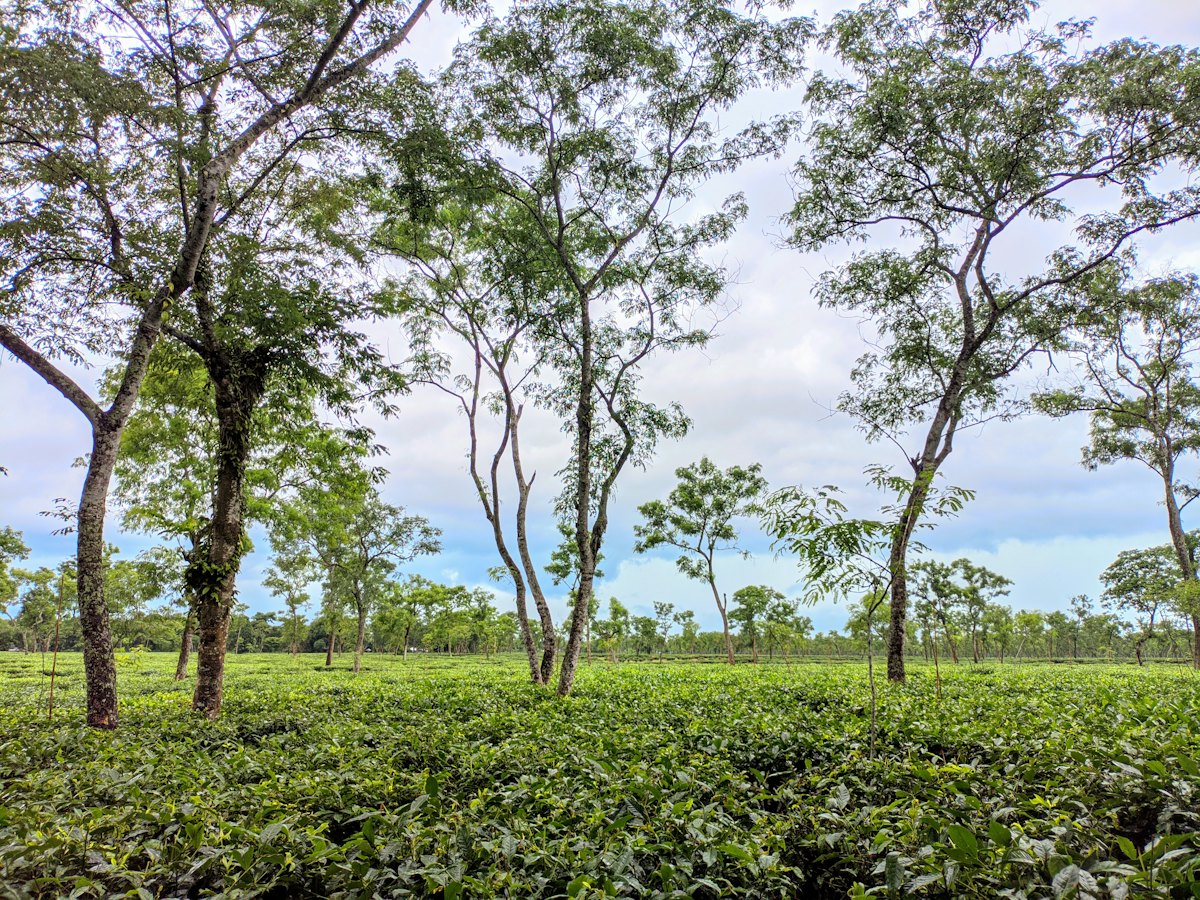
Sreemangal, in Moulvibazar district, is known as the tea capital of Bangladesh. The town is surrounded by tea estates, and the low hills around it are covered in neatly clipped tea bushes shaded by tall trees. The Bangladesh Tea Research Institute is based here, and the tea grown in the surrounding gardens makes up a large part of the country’s crop.

Tea came to the Sylhet region under British rule in the 19th century. Workers were brought from other parts of India to clear and tend the gardens, and their descendants still live and work on the estates today, with their own languages, festivals and labour lines.

Beyond the tea, Sreemangal is a gateway to some of the best nature in the region: Lawachara National Park, lakes and wetlands, pineapple and lemon gardens, and Khasi and Manipuri villages. It is also home to the famous seven-layer tea, poured in bands of different colours. With cool mornings, green hills and a slower pace than Sylhet city, it is a place to spend a night or two.

Tour plans

Two days in Sreemangal

2 days, 1 night
  1. Step 1: Day 1 morning — arrive and settle in

    Arrive by bus or train and check in at a tea resort or town hotel.

  2. Step 2: Day 1 afternoon — the tea gardens

    Walk the estate roads among the tea bushes and stay for sunset over the hills.

  3. Step 3: Day 1 evening — seven-layer tea

    Try the seven-layer tea, then have dinner in town.

  4. Step 4: Day 2 morning — Lawachara

    Go early to Lawachara National Park for a forest walk and a chance to hear the gibbons.

  5. Step 5: Day 2 afternoon — Manipuri villages and home

    Look at Manipuri handwoven cloth, buy some tea to take home, and catch your bus or train.

Plan your visit

Best time to visit

October to March for cool, dry walks; the tea is greenest and plucking busiest in the rainy months, roughly May to September.

How to get there

About 2–2.5 hours from Sylhet by bus or train, and on the Dhaka–Sylhet railway, so trains from Dhaka stop here too.

Getting around

CNGs and rickshaws run around town and out to the gardens, Lawachara and the lakes; hire one for half a day or a full day. Many of the estate roads are pleasant to walk, and some resorts rent bicycles.

Travel tips

  • The tea estates are private, working land. Walk on the roads and paths, do not pick leaves, and ask before entering garden or factory areas.
  • Ask before photographing tea workers, and respect their homes in the labour lines.
  • Mornings are best for walking — the light is soft and it is cooler. Bring a hat and water.
  • In the rainy season, wear shoes that can get muddy and watch for leeches on grassy paths.
  • Hire a CNG or a rickshaw for the day to combine the gardens, Lawachara and a lake or two.
  • On weekends and holidays, book your room ahead.

Discover