
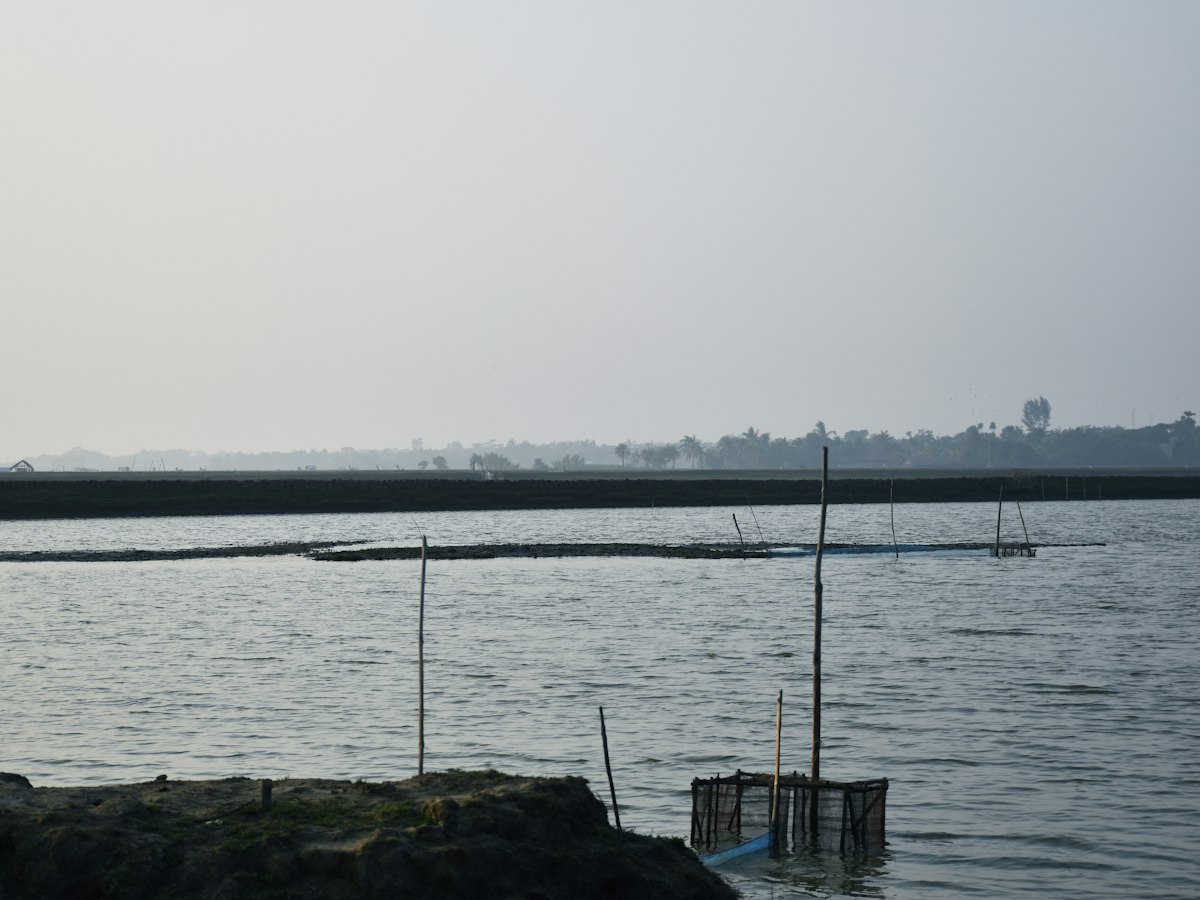
Bagerhat, Khulna

Sundarbans from Mongla

The world’s largest mangrove forest, home of the Bengal tiger: a short boat trip from Mongla to Karamjal, or a few days on a tour boat deep into the eastern Sundarbans.

Local food to try

  • Fish and crab on board

    Sundarbans from Mongla

    Tour boats cook fresh river fish, prawns and crab with rice and dal.

  • Sundarbans honey

    Sundarbans from Mongla

    Wild honey sold in Mongla; buy from a trusted seller.

  • Golda prawn

    Sundarbans from Mongla

    Bagerhat’s giant river prawns, in Mongla’s eateries.

Where to eat

  • Mongla town

    Mongla, Bagerhat

    Simple eateries near the ghat for a meal before or after a day trip.

    Open in Google Maps (opens in a new tab)
  • On board

    Tour boats

    On multi-day trips, all meals are cooked on the boat.

    Open in Google Maps (opens in a new tab)

Where to stay

  • Licensed tour boats

    From Khulna or Mongla

    The usual way to see the deep forest: two or three nights on board, with cabins, meals, guide and guards.

    Open in Google Maps (opens in a new tab)
  • Mongla

    Mongla, Bagerhat

    Hotels in the port town for a day trip to Karamjal.

    Open in Google Maps (opens in a new tab)
  • Khulna city

    About 1–1.5 hours away

    The widest choice of hotels; many trips start here.

    Open in Google Maps (opens in a new tab)

Culture

The people who work in the forest — mawali honey collectors, bawali woodcutters and golpata gatherers, and fishermen — go in with permits in season, and many pray first to Bonbibi, the forest’s guardian, whose shrines stand along the edge of the forest. The honey season usually opens in spring.

History

The Sundarbans is the largest mangrove forest on earth, a maze of tidal rivers, creeks and islands where the Ganges, Brahmaputra and Meghna meet the Bay of Bengal. It is shared by Bangladesh and India, and the Bangladesh part was listed by UNESCO as a World Heritage Site in 1997. The name is often explained by the sundari tree, one of its typical mangroves.

The forest is the home of the Bengal tiger, along with spotted deer, rhesus macaques, wild boar, estuarine crocodiles, river dolphins and hundreds of kinds of birds. It also shields the coast from cyclones and supports the honey collectors, fishermen and woodcutters who have worked here for generations.

From Mongla, the closest stop is Karamjal, a Forest Department centre on the Pasur river with a wooden walkway through the mangroves, a watchtower and a breeding centre for crocodiles and deer. Longer trips on licensed tour boats go south for two or three nights to places such as Kotka, Kochikhali and Harbaria, with walks on forest trails, sea beaches and quiet creeks at dawn.

Tour plans

A day trip to Karamjal

One day
  1. Step 1: Early bus to Mongla

    Leave Khulna early and reach Mongla ghat in the morning.

  2. Step 2: Boat down the Pasur

    Hire a registered trawler and ride down the Pasur, past ships at anchor, to Karamjal.

  3. Step 3: Karamjal walkway

    Walk the wooden trail through the mangroves, climb the watchtower and look for deer and monkeys.

  4. Step 4: Breeding centre

    See the crocodile and deer breeding centre and the small information displays.

  5. Step 5: Back to Mongla

    Return by boat in the afternoon, eat in Mongla and take the bus back to Khulna.

Plan your visit

Best time to visit

November to February, when the weather is cool and the rivers calm; trips may be suspended in bad weather and during seasonal forest closures

How to get there

Mongla is about 1–1.5 hours by bus from Khulna and about 1 hour from Bagerhat town. From the Mongla ghat, hired trawlers reach Karamjal on the Pasur river in roughly an hour. Multi-day trips leave from Khulna or Mongla on licensed tour boats.

Getting around

  • Everything in the forest is by boat: trawlers, tour boats and small country boats for narrow creeks.
  • On land, walk only on marked trails and wooden walkways, with your guide.

Travel tips

  • Entry to the forest needs Forest Department permission and fees; tour operators usually arrange this — check the current rules.
  • Go with a licensed operator and a registered guide; longer trips travel with armed forest guards.
  • Never wander off the trails or leave the group, and stay on the boat unless the guide says it is safe — tigers and crocodiles are real.
  • Plans depend on the tides: landings and creek trips are timed to the water, so be ready to start early.
  • Carry plenty of drinking water, insect repellent, sunscreen, a hat and muted clothes; keep noise down to see wildlife.
  • Take every bit of rubbish back with you, and never feed or approach animals.

Discover