
The Hills of Bandarban: Above the Clouds at Nilgiri and the Golden Temple
A night bus to the hills, a gold spire over the Sangu valley, an open jeep climbing to Nilgiri where clouds drift below the summit, bamboo chicken in town and, for the adventurous, the long way to Boga Lake, if the rules allow.
6 min read
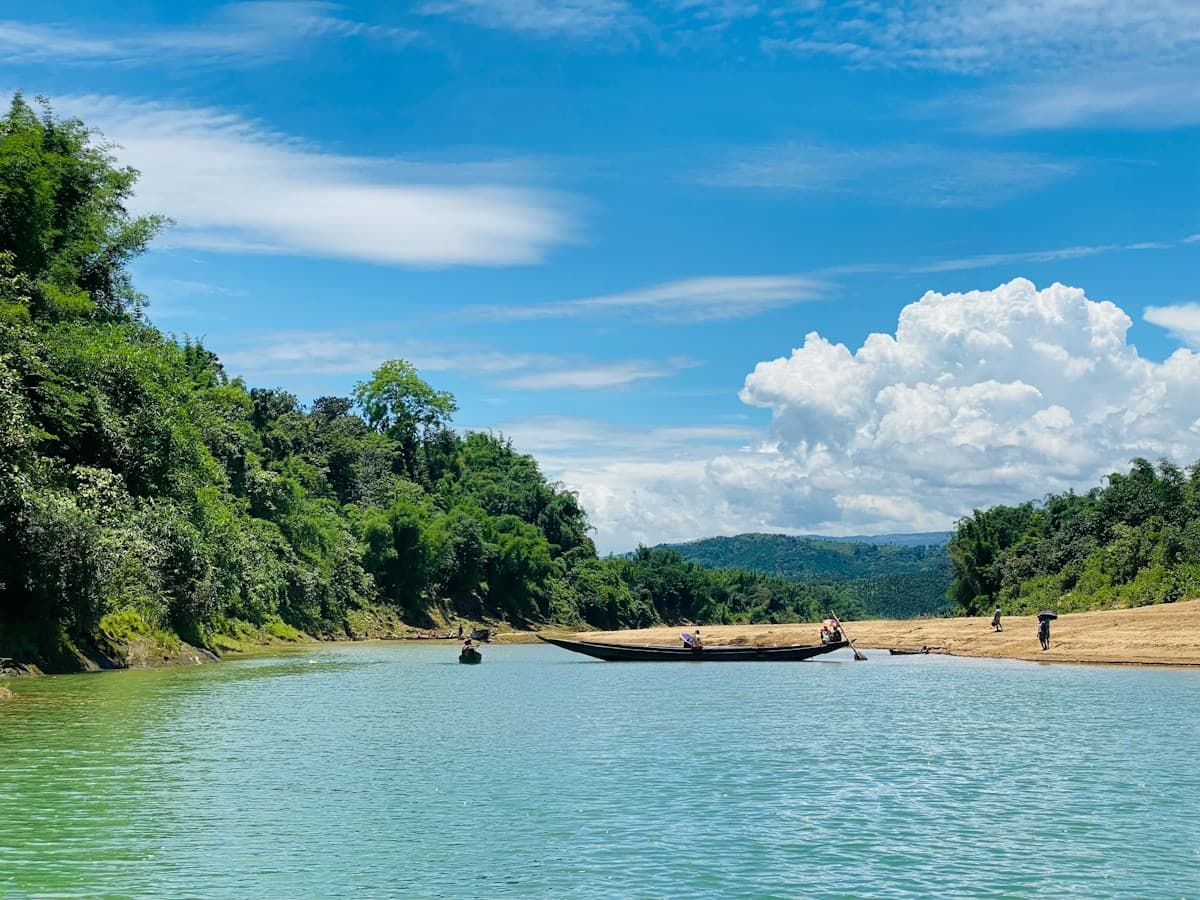
The night bus leaves Dhaka on the highway south, the same road that takes everyone to the sea. Somewhere past Chattogram, in the small hours, it turns off at Keranihat and heads inland, and the road begins to change. It curves. It climbs. The engine labours, then eases, then labours again. When you open your eyes in the first grey light, there are hills on both sides, steep and green and folded one behind another, and a river glinting in the valley below.
You have come to Bandarban, the wildest of the three hill districts, home to the highest peaks in Bangladesh. Keep your national ID card or passport handy: there are checkpoints on the hill roads, and you will be asked for it.
A town in the Sangu valley
Bandarban town sits in the valley of the Sangu river, which comes down from the far hills past Thanchi and Ruma. It is the seat of the Bohmong Raja, head of one of the three traditional circles of the Hill Tracts, and the Marma are the largest community here. But walk through the market and you will hear many languages: the district is home to the Mro, Bawm, Tripura, Tanchangya, Khumi and others, more distinct peoples than almost anywhere else in the country.
You find breakfast near the bus counters, then take a CNG out of town. It is about fifteen minutes to the first great sight.
The Golden Temple
At Pulpara, Balaghata, on a hilltop just outside town, Buddha Dhatu Jadi shines out over the green. Everyone calls it the Golden Temple. Built by the local Marma Buddhist community in the style of the great pagodas of Myanmar, it is often described as the largest Theravada temple in Bangladesh, and as you climb the steps, past dragon-guarded stairways, the gold spire grows until it fills the sky.
The name tells you what it holds: dhatu means a relic, and jadi a stupa. The temple enshrines a relic of the Buddha, and for Buddhists across the Hill Tracts it is a place of deep devotion. Beside it, a small pond known as Debotar Pukur is held sacred too. From the top, the hills roll away towards the Sangu valley.
Dress modestly, covering shoulders and knees, take off your shoes where asked, and keep your voice low. Visiting hours for tourists are limited and can change, and there is usually an entry fee, so check locally before you go. The morning and late-afternoon light is softest on the gold.
The road to Nilgiri
In the afternoon, or better, very early the next morning, you climb into a chander gari, one of the open-backed jeeps hired in town for the hill roads, and head for Nilgiri on the road towards Thanchi.
The road is the adventure. It climbs steeply and winds around ridge after ridge, and the jeep tilts and growls and you hold on. You pass viewpoints like Chimbuk and the Shoilo Propat waterfall, and Mro villages of bamboo houses raised on stilts. On the slopes, patches of jhum, the traditional shifting cultivation of rice and vegetables, stand out against the forest. Stalls by the road sell hill fruit in season: pineapple, papaya, bananas.
Travel only in daylight on this road and use an experienced driver. Mobile signal is patchy once you leave town, so let someone know your plans.
Above the clouds
Nilgiri is a hilltop viewpoint managed by the army, with viewing decks and accommodation on the summit. And it stands high enough that on many mornings, especially in the monsoon and early autumn, the clouds settle below you. You step out at first light into cold air, and the valleys have vanished under a white sea, with only the tops of the nearest hills poking through like islands. Slowly, as the sun warms them, the clouds begin to move, lifting, tearing, drifting past the deck close enough to touch.
In the dry months from October to February the clouds are fewer, but the views are long and clear, ridge after ridge of green fading to blue, and on a clear day you can follow the Sangu far below. Either way, bring a warm layer: it gets cold at the top, especially before dawn.
Bamboo chicken in town
Back in Bandarban, dusty and wind-blown, you find a restaurant serving bamboo chicken: spiced chicken packed inside a length of green bamboo and cooked over the fire, then split open at the table, fragrant and steaming. Have it with jhum rice and hill vegetables, bamboo shoot and a spicy relish. In the market, Marma and Bawm women sell handwoven shawls and cloth from their backstrap looms.
For the adventurous: Boga Lake
Deeper in the hills lies Boga Lake, a deep, still, almost perfectly round lake high in the hills of Ruma, ringed by forest and a small Bawm village. It is the usual overnight stop for trekkers on the way to Keokradong.
Getting there is a serious undertaking. From Bandarban town you go to Ruma Bazar by bus or jeep, about two to three hours, register there with a registered local guide, which is required, and show your ID at the army camps along the way. In the dry season a jeep goes on towards the lake, with a final steep walk; in the rains the road may close and the whole way must be walked. The village offers simple rooms and rice meals cooked by the households.
Above all, check the current rules before you plan anything. Access to Ruma and the trails beyond has been closed to tourists at times for security reasons, and foreigners may need separate permission. The same applies to the boat trip from Thanchi towards Nafakhum Waterfall. And at the lake, do not swim: it is very deep, and people have drowned there.
Plan this trip
- Best time: October to February for dry roads and trails and clear views. June to September brings the sea of clouds at Nilgiri, but slippery roads and riskier boats and treks.
- By bus: direct buses from Dhaka reach Bandarban town in about 8–10 hours, mostly overnight, via Chattogram and Keranihat. From Chattogram, buses take about 2.5–3 hours. Search buses on the Dhaka–Chattogram route, or search buses to Bandarban.
- Getting around: CNGs for the town and the Golden Temple; chander gari jeeps for Nilgiri, Thanchi and Ruma; a registered guide for Boga Lake and beyond.
- Rules: access to parts of Bandarban changes with security conditions; check the current rules, carry ID and photocopies, and follow instructions at checkpoints.
- Read more: our Chittagong Hill Tracts travel guide, and for the other hill districts, Rangamati with Kaptai Lake and Sajek Valley.
- #Bandarban
- #Nilgiri
- #Golden Temple
- #Boga Lake
- #Hill Tracts
- #travel story