
Sunrise at Sajek Valley: A Night Above the Clouds in the Hill Tracts
The journey to Sajek Valley as it unfolds: a night bus to Khagrachhari, the open jeep and the escorted hill road, an evening on the ridge at Ruilui Para, and the moment at dawn when the valleys fill with cloud below you.
5 min read
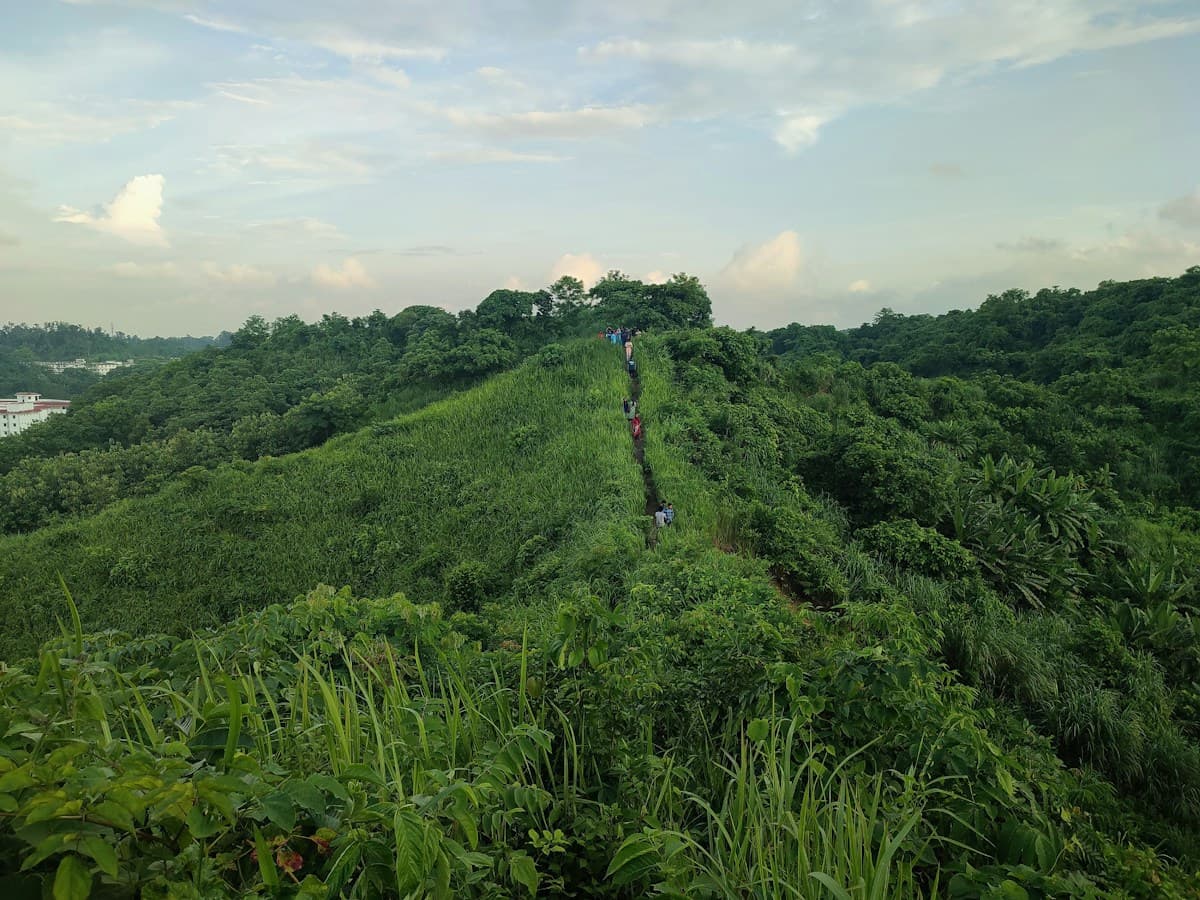
Some places are famous for a single moment. At Sajek, that moment comes just before sunrise, when you stand on a ridge in the cold and look down, not up, at the clouds. Getting there takes a night bus, a jeep and a long climb through the hills, and every part of the journey is worth paying attention to.
The night bus to Khagrachhari
You board the bus in Dhaka in the evening. The trip to Khagrachhari town takes about seven to eight hours, mostly overnight, through Feni and then up into the hills via Ramgarh. For the first half you sleep the flat, familiar sleep of the highway. In the last hours you feel the change: the bus leans into bends, the engine labours on climbs, and the air coming through the gaps in the window turns cooler and smells of wet leaves.
Carry your national ID card or passport where you can reach it. The hill roads have checkpoints, and your details may be checked and recorded on the way. Foreign visitors may need extra permission; check the current rules before you plan.
You arrive in Khagrachhari in the early morning, in a green valley along the Chengi river, ringed by hills. The town is just waking up. Tea is being poured at the stalls near the bus counters, and the open-backed jeeps the locals call chander gari are lined up waiting for passengers bound for Sajek.
The jeep and the escorted road
You have breakfast, find your group and climb into the back of a jeep. There are benches along both sides and a frame overhead to hold on to. You will be glad of it.
The road to Sajek Valley is about 70 km, through Dighinala to Baghaihat, and takes around two and a half to three hours. Vehicles have usually gone up in army-escorted groups at set times from the Baghaihat checkpoint, so your driver times the drive to meet the group. The schedule changes, so check the current arrangement before you set off.
Then the climb begins. The road twists along the spine of the hills, rising and falling, with steep drops on one side and jungle on the other. Banana groves and jhum fields cling to the slopes. Children from the villages wave from the roadside, and sometimes run alongside the jeep. The wind is in your face, the engine growls on the hairpins, and every crest opens a new view of hills folding into hills, blue-green to the horizon.
An afternoon in Ruilui Para
Sajek is a union in the far north of Rangamati district, along the border with Mizoram. Its heart is Ruilui Para, a village strung out along a high ridge, with houses on stilts against the slope, small churches and gardens. The villages here are home mainly to the Lushai, Pangkhua and Tripura peoples. As you walk, remember that these are people's homes, not a stage set: ask before you take a photo of anyone, and keep your voice down.
You check into a cottage, eat lunch, and walk. Ruilui Para is small enough to walk end to end in a short while. In the late afternoon you go up to the helipad, where people gather for the sunset. The sky turns gold over the hills of Mizoram, then purple, and the valleys fill with shadow.
The evening on the ridge
When the sun is gone, the cold comes quickly, especially from November to February, so bring a warm layer. Lights come on along the ridge. Smoke rises from cooking fires, and someone is roasting bamboo chicken: spiced chicken sealed inside a green bamboo tube and cooked over the fire, the classic Sajek evening meal. You eat it on a wooden balcony, wrapped in a shawl, with the dark hills all around and the stars brighter than they ever are in the city.
Electricity and mobile signal can be patchy up here, so charge your power bank when you can. Then go to bed early. You need to be up before dawn.
Clouds below you
Your alarm goes off in the dark. You pull on every layer you brought and step outside. The ridge is quiet, the air sharp. A short jeep ride takes you towards Konglak Para, a little further on, and then you climb a steep path to the peak with a torch in your hand, breathing hard.
At the top you wait. Slowly the sky behind the hills turns grey, then pale orange. And then you see it: the valleys below are full of cloud. On a good morning, usually after rain, the cloud lies like a white sea between the ridges, and the tops of the hills stand out of it like islands. As the sun rises, the light spreads across the cloud, turning it gold and pink. Nobody speaks much.
This is not guaranteed. On some mornings the sky is clear and the valleys are simply green; on others you are inside the cloud and can see nothing at all. The best chance is from the late monsoon to early winter, roughly August to November.
The road back
After breakfast you rejoin the escorted group and ride back down to Khagrachhari, the hills now familiar. If there is time before the night bus home, stop at Alutila Cave, a dark tunnel through the hill that you walk through with a torch, or Risang Waterfall, which slides over a sloping rock face.
Plan this trip
- Best time: August to November for the best chance of clouds at dawn; December to February for clear skies and cold nights.
- By bus: direct buses run from Dhaka to Khagrachhari town in about 7–8 hours, mostly overnight. From Chattogram it is about 3–4 hours. Search buses, or see Dhaka to Chattogram buses if you are breaking the trip there.
- The jeep: hire a chander gari in Khagrachhari, usually for a round trip, and check the current escort schedule from Baghaihat.
- Rules: carry your national ID card or passport; foreigners should check the current rules for the Hill Tracts. Stay at least one night: the dawn is the reason to come.
- Read more: our Chittagong Hill Tracts travel guide and the Rangamati district guide, with Kaptai Lake for another day.
- #Sajek Valley
- #Khagrachhari
- #Hill Tracts
- #sunrise
- #travel story