
A Day in Old Dhaka: Forts, a Star Mosque, the River and Kacchi Biryani
One day in Old Dhaka, from morning light at Lalbagh Fort through the lanes of Armanitola to the pink palace of Ahsan Manzil, a rowing boat across the Buriganga at Sadarghat, and kacchi biryani and bakarkhani to finish.
5 min read
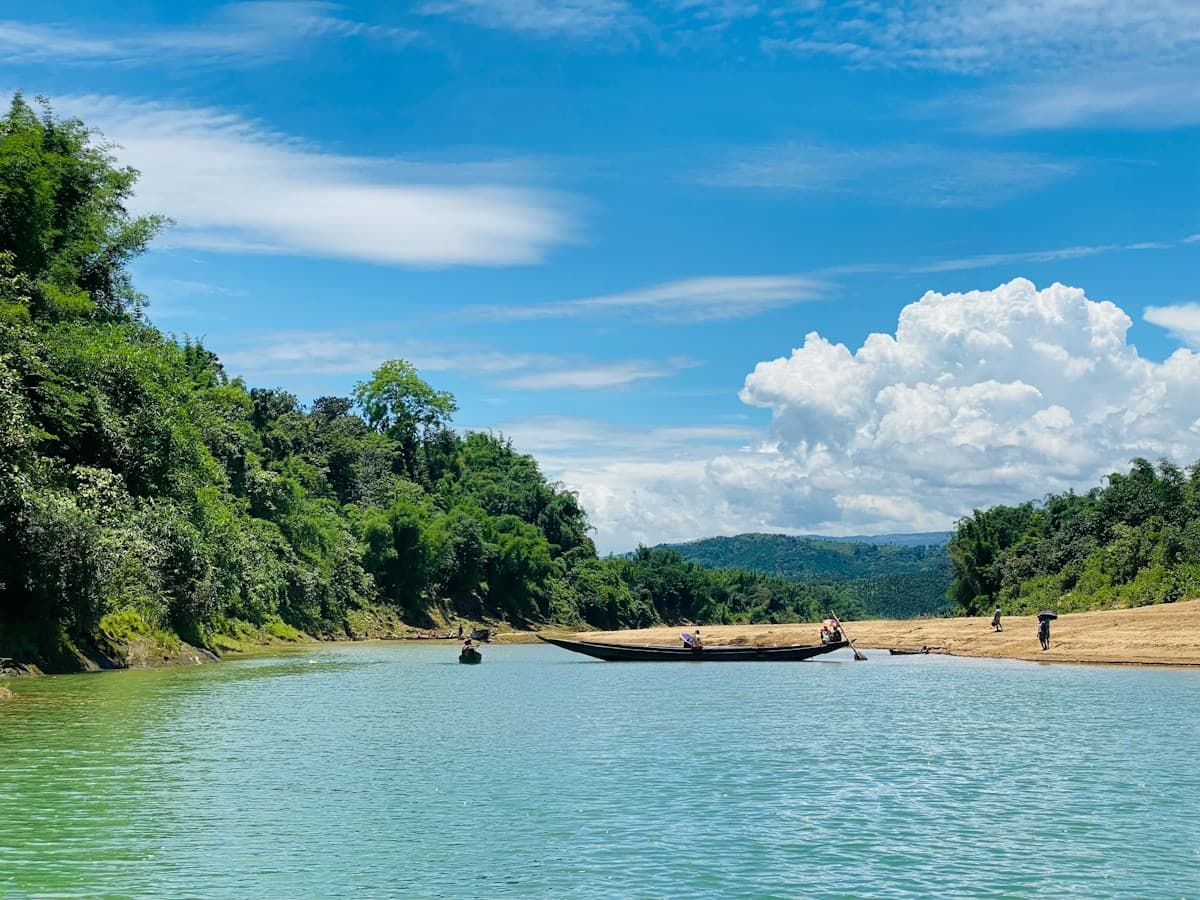
Old Dhaka does not reveal itself from a car window. It is a city of lanes too narrow for traffic, of rickshaw bells and hammering workshops, of Mughal walls and colonial palaces hidden behind shopfronts. To see it you walk, you ride rickshaws, you get a little lost, and you eat well. One day, starting early, is enough to fall for it.
Morning at Lalbagh Fort
You arrive at Lalbagh Fort as the gates open, while the air is still soft. Inside the walls, the noise of the city drops away. Long lawns and straight paths lead between three buildings: a mosque, a hall with a bathhouse, and the tomb of Pari Bibi, faced with marble and tiles.
The fort was begun in 1678 by Prince Muhammad Azam, a son of the emperor Aurangzeb, and the work passed to the governor Shaista Khan. It was never finished. Shaista Khan's daughter, Pari Bibi, died here, and many say he took it as a bad omen. Walking its unfinished lines in the early light, with pigeons on the walls and gardeners watering the grass, you feel the half-told story in the place.
Opening days change, so check before you go. Outside, the lanes of Lalbagh and Chawkbazar are already busy. Have a cup of tea at a stall and a piece of bakarkhani, the flaky, layered bread that Old Dhaka has baked for generations, warm from the tandoor.
Rickshaws to Armanitola
Now you take a rickshaw. This is half the pleasure of Old Dhaka: the driver threads through lanes barely wider than the rickshaw, under tangles of wires, past spice sellers, paper merchants, sweet shops and wholesale markets piled with goods. Horns, bells and shouts mix into one continuous sound. Hold on, keep your bag in your lap, and look up at the old balconies.
In Armanitola the rickshaw stops at the Star Mosque. It was built in the early nineteenth century as a plain, three-domed mosque, and in the early twentieth century it was covered in chini tikri: thousands of pieces of broken china and glazed tile set into the plaster, in blue stars, flowers and patterns. In the morning light the whole facade glitters. Dress modestly, take your shoes off where shown, and avoid prayer times.
A few minutes' walk away is the Armenian Church, built in 1781 by the merchants who gave Armanitola its name. Behind its wall are a quiet churchyard and old gravestones carved in Armenian script. The gate is sometimes closed, and you may need to ask the caretaker to let you in. If it is shut, it is still worth seeing from the lane.
The pink palace on the river
Next, the river. You walk or take a rickshaw down towards the Buriganga, and the pink facade of Ahsan Manzil appears above the riverbank, with its grand staircase and its dome.
This was the palace of the Nawabs of Dhaka, completed in 1872 and rebuilt after a tornado in 1888. Today it is a museum. Inside, the restored rooms show how the Nawab family lived: a ballroom, a dining hall, portraits and furniture. The museum closes one day a week and on some public holidays, so check before you go, and follow the signs about photography inside the galleries. The best view of the facade is from the lawn in front, or from the water.
A boat across the Buriganga
From Ahsan Manzil it is a short walk to Sadarghat, Dhaka's main river port. Here the city's river life is at full volume. Huge multi-deck launches are moored along the bank, their names painted in bright letters, waiting for the evening runs to the south. Porters balance loads on their heads. Hawkers sell everything from snacks to sunglasses.
Down at the ghats, small wooden rowing boats, the kheya, cross the Buriganga to Keraniganj all day. Agree the fare before you step in, sit low and keep still. As the boatman pulls away from the bank, the noise softens. You glide between the great hulls of the launches, the water slapping against the wood, and look back at Ahsan Manzil from the river. It is a short crossing, but it shows you how Dhaka grew: facing the water, living from it.
Keep your phone and wallet close at the ghat; it is crowded, and the boarding pontoons can be slippery.
Kacchi biryani for lunch
By now you are hungry, and Old Dhaka is ready. You head to Nazira Bazar and Bangshal, the heart of Old Dhaka food, where biryani houses such as Haji Biryani have been cooking since the last century. Go at lunchtime, when the pots are full.
Kacchi biryani is the dish: mutton and fragrant rice cooked together in a sealed pot, so the raw meat and rice steam in each other's flavour, with a soft potato hidden somewhere inside. Drink borhani, a spiced yoghurt drink, alongside it. Then find a sweet shop for something cold, and a tea stall for one more cup and one more piece of bakarkhani.
The afternoon
If you still have energy, walk to the Dhakeshwari Temple, one of the city's oldest and most important Hindu temples, or catch a rickshaw towards the old university district and Curzon Hall. As the light fades, the lanes of Old Dhaka fill again, the workshops keep hammering, and the city carries on as it has for centuries.
Plan this trip
- Best time: October to March, when the days are dry and mild enough for walking. Start early to beat the heat and the crowds. Mid-January brings Shakrain, the kite festival over the rooftops.
- Getting there: if you are coming to Dhaka by bus from another city, search buses; check where your coach drops you and choose the stop nearest your hotel. Within the city, take a rickshaw from Gulistan or Bangshal into the old town.
- Tips: dress modestly for the mosque and temple, carry small change for rickshaws and boats, agree fares first, and wear comfortable shoes.
- Read more: our Dhaka travel guide and the Dhaka district guide. For a day out by bus, try Panam City in Sonargaon.
- #Old Dhaka
- #Dhaka
- #Lalbagh Fort
- #Ahsan Manzil
- #food
- #travel story