
Three Days in Sylhet: River Stones, a Swamp Forest and a Shrine at Dusk
Three days in Sylhet, told as a journey: the clear water and stones of Jaflong, a wooden boat through Ratargul's flooded forest, the white stones of Bholaganj, Hazrat Shah Jalal's shrine at dusk and satkora beef in Zindabazar.
5 min read
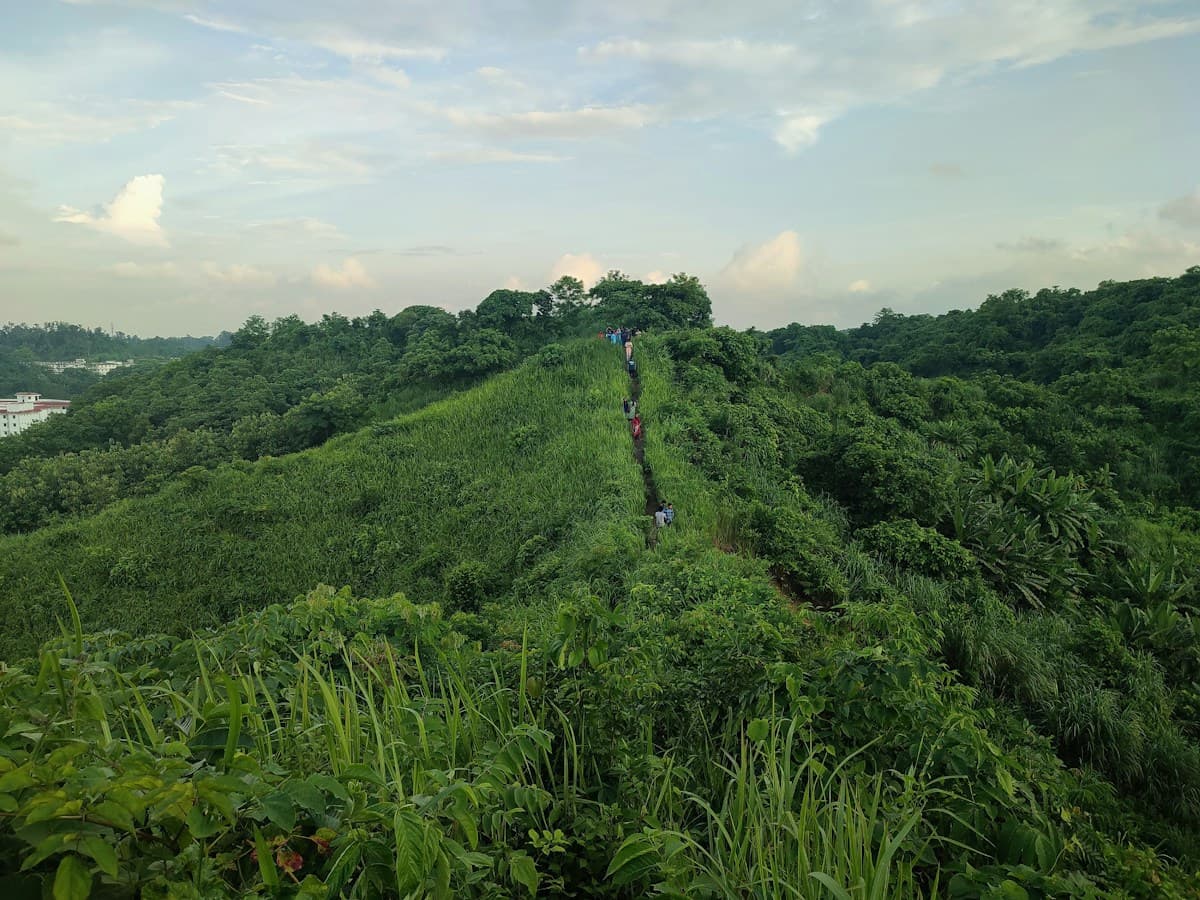
Sylhet is a place of water coming down from the hills. Rivers pour out of Meghalaya, clear and cold, and spread across the plains in beds of stone. In the rainy season a whole forest stands in water. And in the middle of the city, pigeons circle over one of the most loved shrines in the country. Three days is just enough to feel all of it.
The best window for this trip is around the turn of the monsoon, roughly September to October, if the season is right: Ratargul still has water, while the rivers at Jaflong and Bholaganj are full but beginning to clear. Every year is different, so ask locally before you go.
Arriving
You come in from Dhaka by bus, five to seven hours through Narsingdi, Brahmanbaria and Habiganj, the land growing greener and the tea gardens appearing on low hills as you go north-east. By the time you reach the city it is evening, and the streets around Zindabazar are full of light and traffic. You check in, eat something simple and sleep early. Tomorrow starts at sunrise.
Day one: Jaflong
You hire a CNG or a car for the day and head out on the Tamabil road. The city falls away quickly. For an hour and a half or so you drive past paddy fields, stone-crushing yards and roadside markets, and the hills of Meghalaya rise ahead of you, dark green and steep, sometimes with clouds caught on their tops.
At Jaflong the road ends at the Piyain river. The water comes down out of the hills here, and when it is clear you can see every stone on the bed: grey, white, rust-red, rounded smooth by the current. Across the river the hills climb straight up, and on a clear day you can see the suspension bridge at Dawki on the Indian side.
You take a boat across, step out onto the stones and wade in up to your knees. The water is cold enough to make you gasp. Children splash in the shallows; stone workers carry baskets along the bank. If the current is strong after rain, stay close to the edge. The river looks gentle, but it can pull hard.
On the way back you might stop at the blue-green water of Lalakhal, which is at its most striking in the dry months. You reach the city after dark, tired and sun-warm.
Day two: Ratargul and Bholaganj
You leave early again, this time for Ratargul Swamp Forest, one of the few freshwater swamp forests left in Bangladesh. At the ghat a boatman helps you down into a narrow wooden boat, and you push off.
Within minutes the open water is behind you and the forest closes in. Trees stand in the water up to their branches, their trunks dark and twisted, their crowns meeting overhead. The light turns green. The only sounds are the dip of the paddle, birds you cannot see, and the hush of leaves. Sometimes a kingfisher flashes past. The boatman steers between the trunks with a long bamboo pole, and the channels open and close around you like corridors. Keep your hands inside the boat and your voice low: this is a protected forest, and the quiet is the point.
After lunch you drive about an hour to Companiganj for Bholaganj Sada Pathor. A short boat ride takes you upriver to where the Dhalai comes out of the hills and spreads over a wide bed of pale, rounded stones. Clear water runs over them, ankle-deep in some places and much deeper in others. You walk on the white stones, sit in the shallows, and look up at the hills of Meghalaya close in front of you. Do not wade out into the main current, especially after heavy rain.
If you have time on another day, Bisnakandi, where several streams tumble out of the folded hills, is a similar trip.
Day three: the city
Your last day stays close to the city. In the morning you might walk along the Surma to Keane Bridge, the old iron bridge that has become a symbol of Sylhet, and eat lunch at a long-running restaurant in Zindabazar such as Panshi, where rice comes with a crowd of bhortas, fish curries and dal.
Then, as the afternoon light softens, you go to Hazrat Shah Jalal's Shrine at Dargah Gate. Dress modestly, take your shoes off where you are asked, and climb the steps slowly with everyone else. The saint came to Sylhet in the early fourteenth century, and for many people this is the spiritual heart of the region.
At dusk the place is at its most moving. The call to prayer rises over the courtyard. Candles flicker. Flocks of grey Jalali pigeons wheel overhead and settle on the rooftops; nobody disturbs them. Pilgrims feed the fish in the dargah pond, recite quietly, tie threads, sit in silence. Whatever your faith, you find yourself slowing down. Keep your voice low, ask before you photograph anyone, and keep an eye on your phone in the crowd, which is heaviest on Thursday evenings and Fridays.
Satkora beef in Zindabazar
Your last dinner is the dish that Sylhet is known for: satkora beef, a curry cooked with the rind of satkora, a bitter-sour local citrus that gives the meat a scent you will not find anywhere else. It comes with rice and more bhortas than the table can hold. If you still have room, a short trip to Sreemangal for the tea gardens and Nilkantha Tea Cabin's layered tea makes a fine fourth day.
Plan this trip
- Best time: June to October for Ratargul's flooded forest; October to March for the clearest water at Jaflong; roughly August to November for Bholaganj. Late September to October often lets you see all three, but ask locally about water levels.
- By bus: buses from Dhaka take about 5–7 hours, with day and night departures. Search Dhaka to Sylhet buses.
- Getting around: hire a CNG, car or microbus for each day out; the spots are spread out and the last stretch is often by boat. Agree the fare and the time first.
- Safety: river currents are strong after rain; wear a life jacket in boats and do not wade into the main channel.
- Read more: our Sylhet travel guide and the Sylhet district guide.
- #Sylhet
- #Jaflong
- #Ratargul
- #Bholaganj
- #travel story