
Into the Sundarbans by Boat: Mangrove Creeks, Tracks in the Mud and Silent Nights
A journey into the Sundarbans on a licensed tour boat from Khulna or Mongla: the wide Pasur river, the walkway at Karamjal, narrow creeks at high tide, tracks pressed into the mud, the armed forest guard, and the deep silence of the forest at night.
5 min read
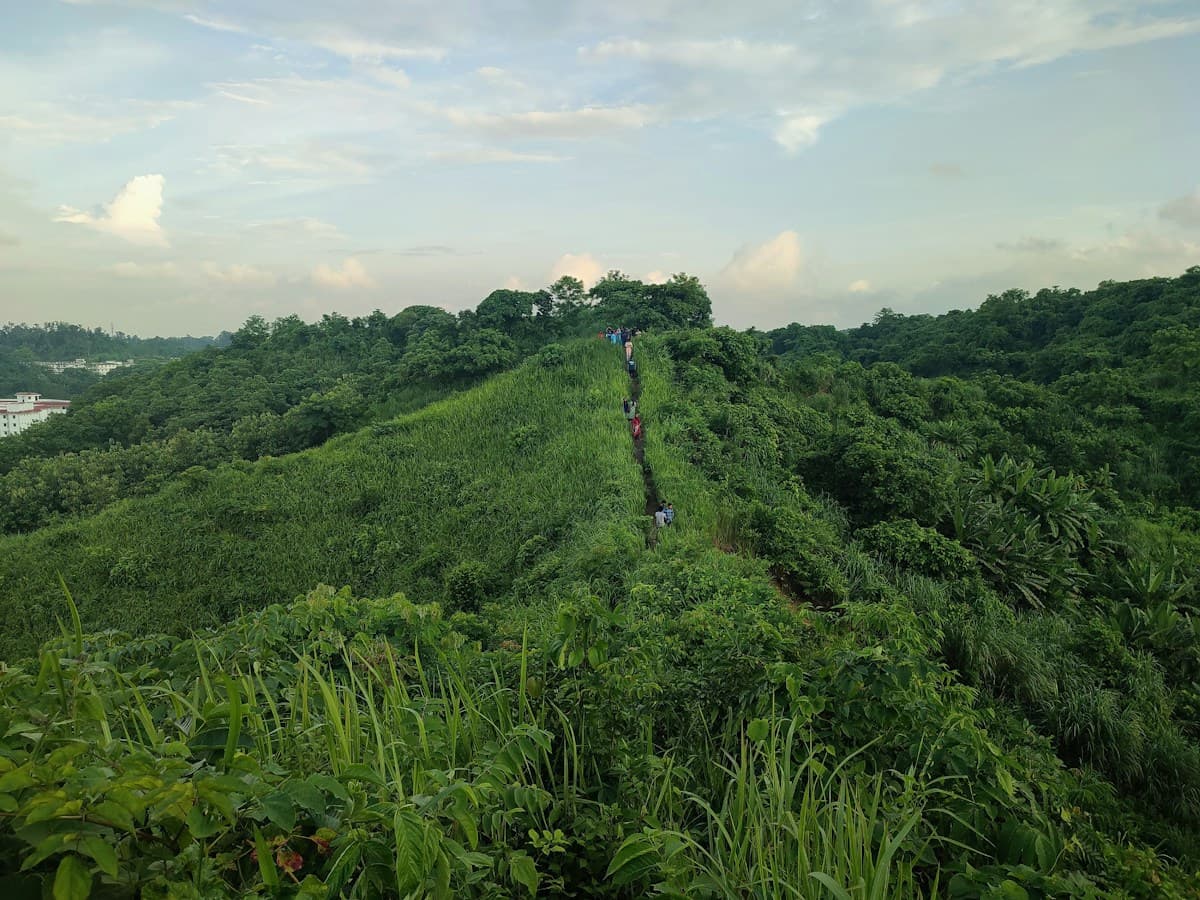
The Sundarbans is not a place you look at. It is a place you enter, slowly, by water, and it changes the way you listen. The largest mangrove forest on earth, home of the Bengal tiger, it is a maze of tidal rivers and creeks where the land is never quite solid and the water is never quite still.
To the river
You come by bus from Dhaka to Khulna, about four to five hours across the Padma Bridge, or straight on to Mongla. Most multi-day trips leave from Khulna or Mongla on licensed tour boats, with meals, a guide and permits arranged by the operator. Entry to the forest needs Forest Department permission and fees, and the rules change, so check the current rules when you book.
Your boat is waiting at the ghat in the morning: a wooden or steel vessel with a deck to sit on, cabins below and a galley that already smells of frying onions. Life jackets should be on board for everyone; check before you leave. You find a seat at the rail and watch the town slide away.
Down the Pasur
The river is wide and brown, and busy at first. Ships lie at anchor near the port of Mongla, cargo boats pass low in the water, and fishermen work from small boats with nets strung between bamboo poles. Then, gradually, the banks change. The fields and coconut groves give way to a low, dark-green wall of trees, their roots reaching down into the mud.
The first stop for many boats is Karamjal, on the Pasur, about an hour by boat from Mongla. A wooden walkway leads into the mangroves on stilts above the mud. You walk it slowly. The forest floor is a carpet of pneumatophores, the breathing roots that poke up out of the mud like thousands of small spikes. Crabs scuttle into holes. Rhesus macaques watch you from the branches, and if you are lucky a spotted deer stands still between the trees. There is a watchtower to climb, and a breeding centre for crocodiles and deer.
The narrow creeks
Then the boat goes deeper, and this is when the Sundarbans really begins. Everything depends on the tides: the guide times the landings and creek trips to the water, so you learn to be ready early and at odd hours.
At high tide, you leave the big boat and climb into a small country boat to paddle into the narrow creeks, called khal. The engine noise is gone. The water is the colour of milky tea, and the forest closes in on both sides so close you could touch it. Branches meet overhead. A kingfisher sits on a dead branch and drops into the water. Mudskippers flip across the banks. Somewhere a bird you cannot see calls the same note again and again.
Your guide speaks in a whisper and points: a monitor lizard sliding into the water, an egret lifting off. You stay in the boat unless the guide says it is safe to step ashore, and you keep your hands inside. Estuarine crocodiles live in these waters.
Tracks in the mud
At low tide the forest shows another face. The water falls away and leaves wide, shining banks of mud, and the mud is a record of who passed by. Deer hooves. The long scratch of a crocodile's tail. Crab trails. And, every so often, a guide will lean over the side and point to a round print with four toes: a pugmark.
Seeing a tiger is rare, and you should not come expecting it. But the prints, the guide's lowered voice and the way the deer freeze and listen are enough to remind you whose forest this is.
The forest guard
On longer trips your group travels with armed forest guards. When you land at a forest station or walk a trail, one goes ahead and one behind, rifles on their shoulders, eyes on the undergrowth. The rules are simple and serious: never wander off the trail, never leave the group, and do what the guide and the guard say. Tigers and crocodiles are real, and so are snakes in the leaf litter.
You will also see people who work in the forest with permits in season: honey collectors called mawali, woodcutters and golpata gatherers called bawali, and fishermen. Many pray first to Bonbibi, the forest's guardian, honoured by Hindus and Muslims alike, whose small shrines stand along the edge of the forest.
The silence at night
When the light goes, the boat anchors in a wide channel, away from the banks. Dinner comes up from the galley: rice, dal, fish curry, perhaps crab or prawns. Then the generator goes off, and the silence arrives.
It is not truly silent. Water laps against the hull. Insects hum. Far off, a deer gives a sharp alarm call, and every head on deck turns. Fireflies drift along the bank like slow sparks. If the sky is clear, the stars come down to the treetops. You sit with a cup of tea and say very little. It is one of the few places left where the night feels larger than you.
In the morning, mist lies on the water, birds start up all at once, and the boat turns for home.
Plan this trip
- Best time: November to February, for cool, dry weather and calm rivers. Avoid the cyclone months of May and October–November for boat trips, and postpone if a storm is forecast.
- By bus: buses from Dhaka to Khulna take about 4–5 hours across the Padma Bridge, and from Khulna to Mongla about 1–1.5 hours. Buses also run from Dhaka straight to Mongla. Search buses.
- Permits and operators: go with a licensed operator and a registered guide; permission and fees are needed, so check the current rules.
- Safety: wear a life jacket on small boats, stay with the group and the guards, and carry water, insect repellent, a hat and a torch.
- More to see: the Khulna district guide, the Bagerhat district guide with the Sixty Dome Mosque and Khan Jahan Ali's Tomb, and the quieter western side of the forest in Sundarbans from Munshiganj. Read our Sundarbans travel guide before you go.
- #Sundarbans
- #Mongla
- #Khulna
- #mangrove forest
- #travel story