
Mango Season in Rajshahi: Orchards, Padma Sunsets and Kalai Ruti After Dark
Early summer in the Silk City: a night bus into the Varendra country, orchards heavy with fruit, the mango market at Kansat, Puthia’s terracotta temples, sunset on the Padma bank and hot kalai ruti from a roadside griddle.
6 min read
The bus leaves Dhaka late in the evening, and for a long time there is nothing outside the window but headlights and the glow of roadside tea stalls. Somewhere around midnight the wheels hum differently and the dark opens out on both sides: you are crossing the Jamuna on the Jamuna Bridge, the river invisible below except for a few lights on the water. Then sleep, the kind you get on a bus, in short pieces.
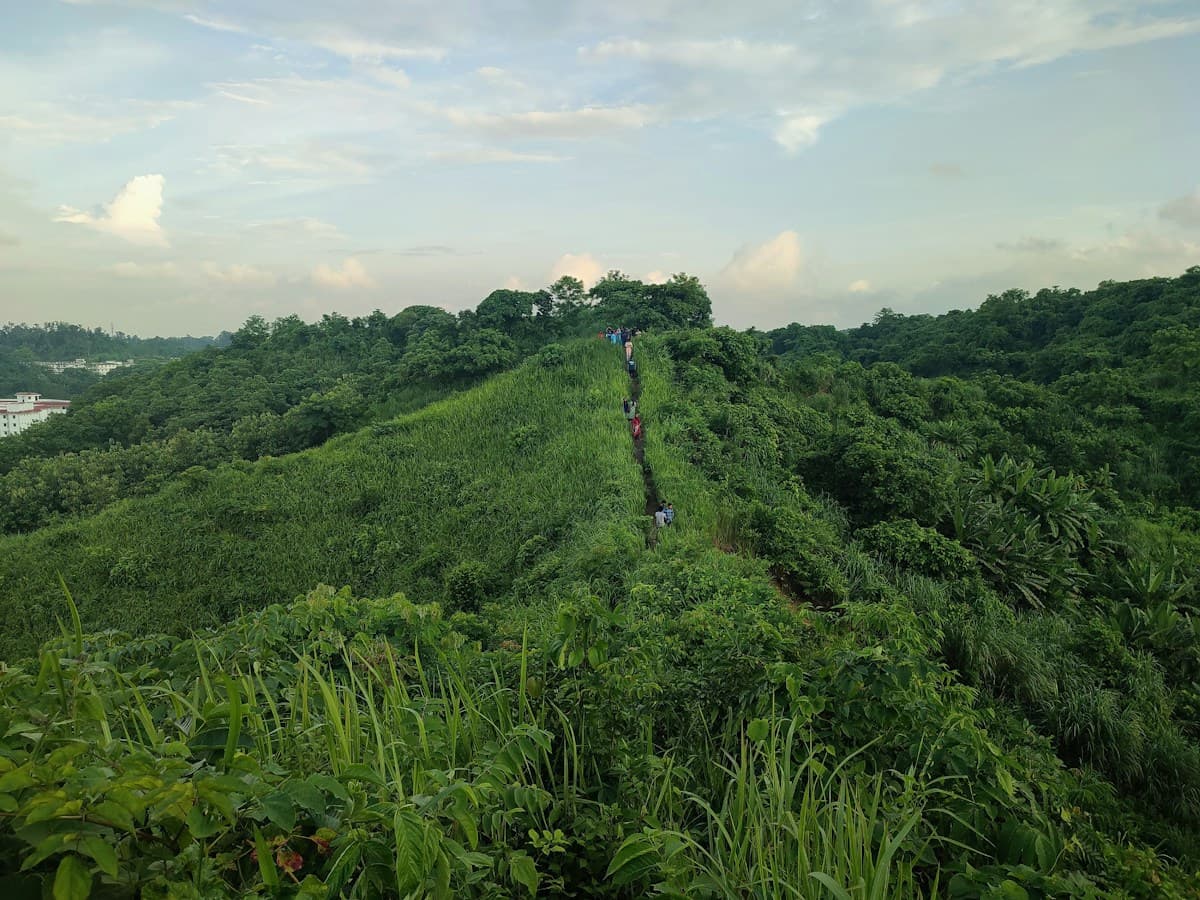
When you wake, the light is grey-blue and the country has changed. This is the old Varendra land of the north-west, and as the sun comes up you notice the trees before anything else. Mango trees, row after row of them, dark green and low-spreading, their branches heavy with fruit. It is early summer, and you have come to Rajshahi in mango season.
Morning in the Silk City
The bus drops you in the city after five or six hours on the road. A rickshaw takes you through streets that are wider, cleaner and quieter than the ones you left behind. Rajshahi is called the Silk City for the cloth it has woven for centuries, but in May, June and July it could just as easily be called the mango city. Fruit is piled on carts at every corner, stacked in pyramids outside shops, carried in baskets on the backs of bicycles.
You find tea at a stall near Shaheb Bazar and watch the city wake up. By nine the heat has already begun to build. This is the deal you make with Rajshahi in mango season: the days are hot, sometimes fiercely so, and in return the whole region smells faintly sweet.
If you want shade and history before the sun gets high, the Varendra Research Museum is a short rickshaw ride away, its galleries full of stone sculpture and inscriptions from the region’s long past. The shrine of Shah Makhdum, near the river, is quieter still in the morning.
Into mango country
The real reason you came lies outside the city. Rajshahi and Chapainawabganj, its neighbour to the west, are the heart of the country’s mango harvest, and the names are a litany every local can recite: Gopalbhog, Khirsapat (Himsagar), Langra, Fazli, Ashwina. They do not all ripen at once. Roughly speaking, the early varieties come first and the big Fazli and the late Ashwina carry the season on into high summer, so what you find depends on the week you arrive.
Take a bus west to Chapainawabganj town, then go on towards Sona Masjid. The road runs through orchards almost the whole way. Between the trees you glimpse farmers on ladders, children guarding fallen fruit, crates being loaded onto vans. If the season is right, the market at Kansat stops you in your tracks. It is one of the biggest mango markets in the country, busy from late May into July, and on a good morning it is a slow-moving river of vans, bicycles and handcarts, all stacked with baskets of fruit. Wholesalers shout prices, sellers cut slices for buyers to taste, and the air is thick with the smell of ripe mango and diesel.
Beyond Kansat, almost at the border, the old capital of Gaur has left its stone and brick behind among the orchards. The Choto Sona Mosque, faced in stone in the Sultanate period, sits quietly with mango trees around it, and the Mughal-era Tohakhana is a short auto-rickshaw ride away beside its pond. This is a border area: stay where visitors normally go and follow any instructions from officials.
Or east, to Puthia
If you have a second day, go the other way. About 30 kilometres east of the city, on the Natore road, the village of Puthia holds one of the largest groups of old Hindu temples in Bangladesh, built by the Puthia zamindars and their ranis around the village ponds.
At the Puthia Temple Complex, the big Bhubaneshwar Shiva Temple rises over the Shiv Sagar pond, built in 1823 by Rani Bhubanmoyee Devi, with a central spire and four corner towers. The smaller Pancharatna Govinda Temple is the one to linger over: its walls are covered in terracotta plaques of gods, battles and everyday life, and the longer you look, the more you see. There is little shade between the temples, so come early and carry water. Natore Rajbari is further along the same road if you want to make a full day of it, and the terracotta of the Bagha Mosque, south-east of the city, sits in mango country too.
Sunset on the Padma
Whatever you do in the day, come back to the river in the late afternoon. The Padma riverbank is where Rajshahi goes to breathe. You walk along T-Badh and the riverside promenades with families, students and couples, past tea and snack stalls doing brisk business.
In early summer the river is still broad and slow, with sandbanks showing in places; as the monsoon arrives in June and July it begins to rise and fill. Either way, the light is the thing. The sun drops towards the far bank, the water turns from silver to copper to rose, and the boats become silhouettes. A breeze comes off the river, the first relief all day, and nobody seems in a hurry to leave.
Kalai ruti after dark
When the light is gone, follow your nose to a kalai ruti stall. The flatbread is made from black gram and rice flour, patted out by hand and cooked on a hot griddle until it is thick, soft and slightly smoky. It comes with a sharp chilli-and-onion bhorta, or with beef if you want something heavier. You tear it with your fingers, burn them a little, and order another. The stalls are busiest in the evenings, and a little crowd always seems to be waiting.
There will be mango for dessert, of course. There is always mango for dessert.
Carrying the season home
Before you leave, you will be tempted to take a crate or two with you, and many shops in the city will pack and send boxes home. Ask how and when they deliver before you pay, and ask which fruit is ready to eat and which needs a few more days. On the bus back, someone will almost certainly have a box of mangoes under their seat, and the whole coach will smell of the season you are leaving behind.
Plan this trip
- Best time: May to July for mangoes; it is hot, so plan outdoor visits for the early morning and late afternoon. For cooler sightseeing and winter evenings of kalai ruti, go from October to February.
- By bus: buses from Dhaka take about 5–6 hours via the Jamuna Bridge, with day and night departures. Search buses on the Dhaka–Rajshahi route, or search buses from other cities. Buses and hotels fill up in mango season, so book ahead.
- Getting around: stay in Rajshahi and take intercity buses or a hired car for Chapainawabganj, Puthia, Natore and Bagha.
- Read more: our Rajshahi travel guide, the Rajshahi and Chapainawabganj district guides, and our food guide by region.
- #Rajshahi
- #mango season
- #Chapainawabganj
- #Puthia
- #travel story